Dog Barking Training Program: Free Plan or Online Course?
Affiliate disclosure: we may earn a commission from the program mentioned below. How this works.
Short answer
A good dog barking training program teaches your dog what to do instead of barking, with rewards and without shock, spray or noise collars. You can start for free: manage the trigger, teach a go-to-mat routine and make the doorbell predict treats. An online course may suit owners who want structured daily games; fear or aggression needs a professional.
If you’re looking for a program to stop your dog barking, especially at the door, this page helps you decide between doing it yourself with free steps and following a paid course. The free steps below work on their own. We’re an affiliate for one course, and we say clearly who it doesn’t suit.
Why do dogs bark at the door, and what should a program teach?
The doorbell predicts something big for a dog: a visitor, a delivery, someone at the edge of their territory. Barking often seems to work, too, because the person at the door always goes away or comes in. That’s why a good program doesn’t just try to silence the noise. It teaches your dog a different job when the trigger happens, such as going to a mat, and makes the trigger predict good things.
The American Veterinary Society of Animal Behavior recommends reward-based training only. The ASPCA classes anti-bark collars as punishment devices and doesn’t recommend them as a first choice; many dogs bark again as soon as the collar comes off.
Three free steps to start today
These are a summary. Our full guide to stopping barking at the door walks through each one, with visitors and deliveries.
- Manage the trigger while you train. Use a baby gate or another room for real deliveries, and block the view from a window next to the door. The ASPCA suggests removable film on the glass, and warns against “Who’s there?”, which encourages the barking.
- Teach “go to mat.” Toss a treat onto a mat a few steps from the door and reward your dog for stepping on it, until they head there eagerly. The AKC suggests using the doorbell itself as the cue to go to the mat, once your dog is relaxed with the sound.
- Make the doorbell predict treats. Play a recorded doorbell so quietly that your dog notices but doesn’t bark: sound first, then a treat. VCA Animal Hospitals advises raising the volume only after two or three successful sessions.
If your dog also barks at the window, at night or for attention, our barking guide helps you work out which kind of barking it is, and shows how to teach a quiet cue.
What to look for in a barking training program
| Look for | Avoid |
|---|---|
| Rewards for a calm alternative, like going to a mat | Shock, spray (citronella) or noise collars |
| Small steps, starting below the level that makes your dog bark | Scolding, yelling or “startling” your dog |
| A plan for managing real visitors while you train | Promises to stop barking in a set number of days |
| Clear advice on when to see a vet or a behavior professional | Advice to push a fearful dog to stay near the door |
Common mistakes
- Moving too fast. VCA lists panting, trembling, trying to escape, barking and not taking treats as signs you’ve gone too far. Go back a step.
- Letting real visitors undo the practice. Every time your dog barks at a real delivery, they rehearse the old habit. Manage first.
- Using punishment. It can suppress the noise for a while without changing why your dog barks, and it can make fear worse.
- Switching plans every few days. Pick one routine, free or paid, and give it a fair try. Everyone in the household should use the same routine, as the AKC advises.
Barking in puppies, adolescents and older dogs
Puppies bark to explore their voice and to ask for things, and in young puppies, barking at night is often a real need to go outside; our guide to barking at night covers it. Adolescent dogs may seem to forget their training for a while, so keep the steps easy. New barking in an older dog deserves a check with your veterinarian first.
When to get professional help
Contact your veterinarian and a qualified behavior professional if your dog is frightened of visitors, growls, lunges or snaps at people at the door, or if you’ve followed a routine for several weeks with no progress. Don’t push a fearful dog to stay near the door: let them watch from behind a gate or rest in another room while you get help.
Brain Training for Dogs: what the vendor says it is
If you’d rather follow a structured course than plan sessions yourself, this is the one we’re an affiliate for. Everything in this section comes from the vendor’s sales page; we haven’t worked through the course yet.
According to the vendor, Brain Training for Dogs is an online course by Adrienne Farricelli, whom the vendor describes as a CPDT-KA certified trainer. It’s built around more than 21 reward-based games in seven modules, with video demonstrations, written lessons, an archive of behavior articles, a members’ forum and question support. For barking, the vendor lists a “look at that” game for dogs who bark at dogs or people from the window, and a bonus course with tactics for barking at triggers such as the doorbell. The vendor describes all of its techniques as force-free.
| May suit you if… | Probably not the right step if… |
|---|---|
| Your dog barks from excitement, boredom or habit | Your dog is frightened of visitors |
| You want games and lessons in a set order | Your dog growls, lunges or snaps at people |
| You can practice in short sessions most days | Your dog’s barking started suddenly (see your vet) |
| You like learning from video and written steps | You want someone to watch you and give feedback |
The vendor offers a 60-day money-back guarantee. We don’t list a price because it can change; the vendor’s page shows the current one. For more detail on what’s included and how the refund works, see our page on price, refund and what’s included.
Prefer to keep going for free? Follow the full doorbell and door guide, or take the quiz to get the guide for your dog’s problem by email.
Not sure where to start? Take the 7-question quiz and get the guide for your result by email.
Frequently asked questions
Do I need a paid program to stop my dog barking at the door?
No. Our free step-by-step guide to barking at the door covers the whole routine. A paid course is an option if you'd rather follow a set sequence of games and lessons.
What should a barking training program avoid?
Shock, spray and noise collars, scolding, and promises to stop barking in a set number of days. The AVSAB recommends reward-based training only.
Does Brain Training for Dogs cover barking?
According to the vendor, one game targets barking at dogs or people from the window, and a bonus course covers barking at triggers such as the doorbell. We haven't worked through the course yet.
Is there a money-back guarantee?
The vendor offers a 60-day money-back guarantee. Check the current terms and price on the vendor's page before buying.
Sources
- How to stop your dog from barking at the doorbell — American Kennel Club (Sassafras Patterdale, CPDT-KA)
- Desensitization and Counterconditioning — VCA Animal Hospitals
- Barking — ASPCA
- How to get your dog to stop barking — Humane World for Animals (formerly The Humane Society of the United States)
- Humane Dog Training Position Statement (2021) — American Veterinary Society of Animal Behavior
- Brain Training for Dogs course page — Brain Training for Dogs
Related guides
 How to Stop a Dog From Barking: A Force-Free Guide
Why dogs bark, how to tell which kind of barking you're dealing with, and a step-by-step force-free plan to reduce it without yelling or bark collars.
 Why Is My Dog Barking at Night? Causes and Fixes
The common reasons dogs bark at night, from potty needs and outside noises to boredom and senior cognitive changes, plus a calm plan to fix each one.
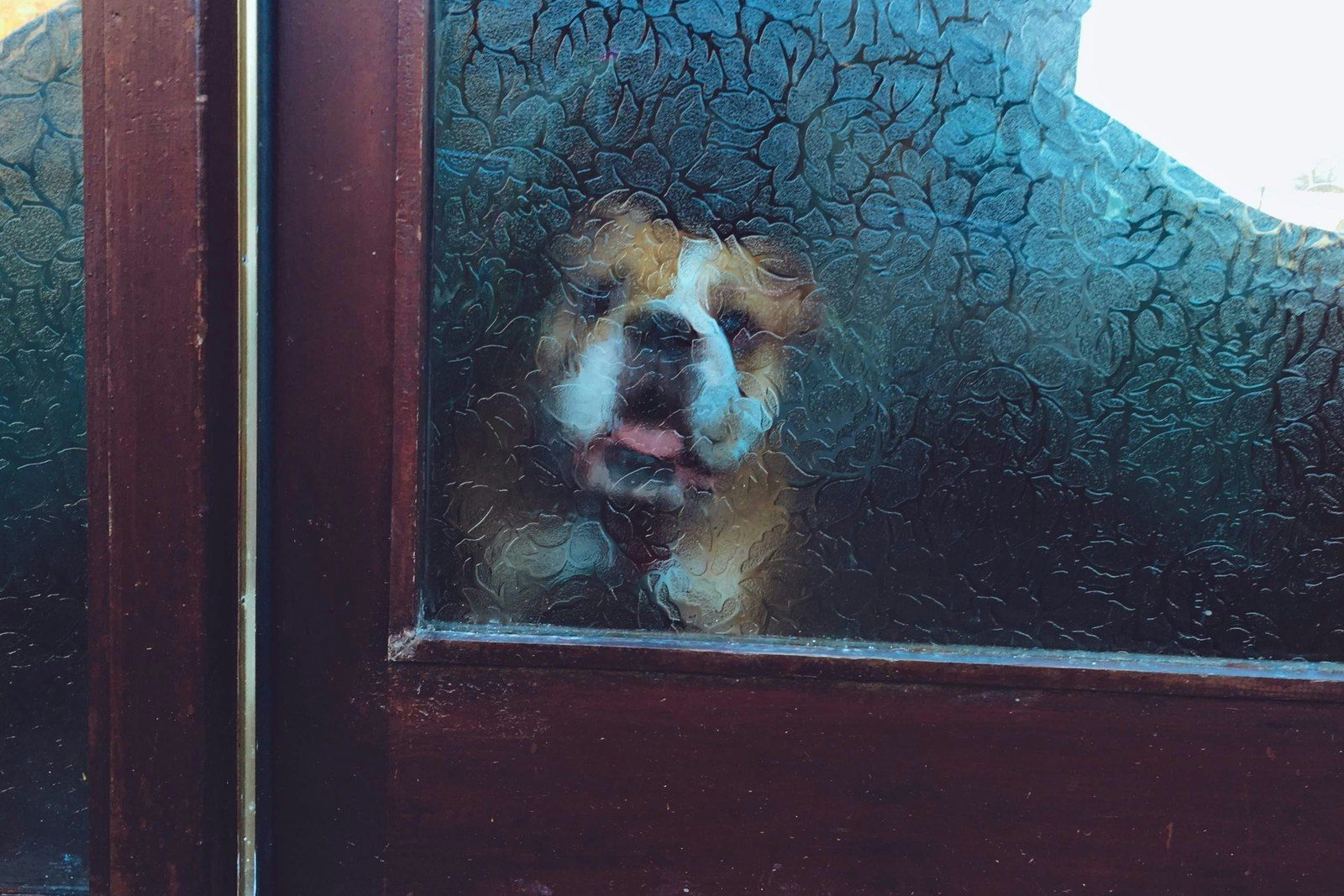 How to Stop a Dog Barking at the Doorbell and Door
A step-by-step, force-free plan to teach your dog to go to a mat when the doorbell rings instead of barking, with tips for visitors, deliveries and pups.