When Do Puppies Stop Biting? Ages and What Helps
Affiliate disclosure: we may earn a commission from the program mentioned below. How this works.
Short answer
There's no fixed age. Teething usually ends by about 6 months, when most puppies have their adult teeth, and mouthing tends to ease as puppies learn to be gentle and have the right things to chew. If play biting hasn't eased by about 6 months, the AKC's chief veterinarian suggests asking an experienced trainer or behavior specialist for help.
Not sure where to start? Take the 2-minute quiz for a first-week plan.
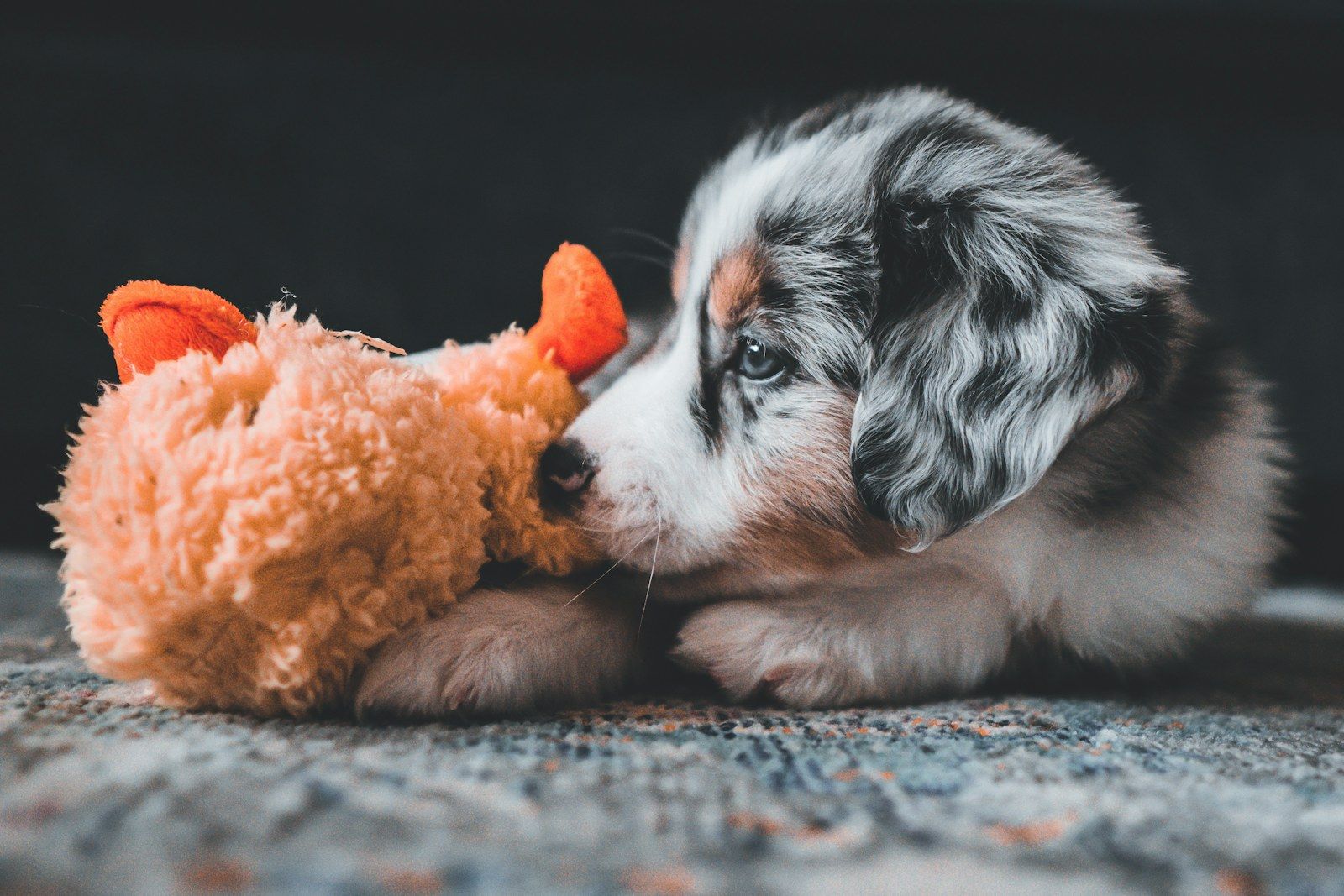
If your puppy treats your hands like chew toys, you’re probably counting the weeks until it stops. The honest answer is that there’s no single date: part of the biting is teething, which has a fairly predictable timeline, and part is play that your puppy has to learn to soften. This guide covers the age-by-age picture and what helps it ease sooner. For the full training plan, see our guide on how to stop a dog from biting.
Why do puppies bite so much?
Puppies spend a great deal of time playing, chewing and investigating, and the ASPCA points out that all of these involve their mouths and their needle-sharp teeth. When they play with people, they often bite and mouth hands, limbs and clothing. That’s normal, but the ASPCA notes that what seems cute at seven weeks is much less endearing at three or four months, when your puppy is bigger by the day.
Two things drive most of it:
- Teething. PetMD’s veterinary dentist explains that teething discomfort can make a puppy chew more often and become more mouthy during play.
- Exploring and playing. PetMD notes that between about 3 and 7 months puppies naturally explore with their mouths, which overlaps with teething, so it can be hard to tell sore gums from curiosity.
Biting caused by teething fades as the adult teeth come in. Biting during play fades as your puppy learns, which is the part you can speed up.
Puppy biting by age: a timeline
| Age | Teeth (PetMD, AKC) | What’s typical | Focus now |
|---|---|---|---|
| 3 to 8 weeks | Baby teeth erupt from about 3 weeks; a full set of 28 by about 6 to 8 weeks (PetMD) | Puppies learn bite inhibition from littermates (ASPCA) | With the breeder or litter |
| 8 to 12 weeks | Sharp baby teeth | Lots of mouthing in play | Toys everywhere; teach a softer mouth |
| 3 to 4 months | Baby teeth start falling out (about 3½ to 5 months, PetMD; 3 to 4 months, AKC) | Sore gums, more chewing | Chilled chews; pause play when teeth touch skin |
| 4 to 6 months | Adult premolars (4 to 6 months) and molars (5 to 7 months) come in (PetMD) | Chewing stays high | Keep it consistent; protect naps |
| About 6 months | Most puppies have their full set of 42 adult teeth (PetMD); baby teeth should be gone (AKC) | Teething-related biting fades | If play biting hasn’t eased, get help (AKC) |
| 6 to 18 months | Adult teeth settling in | Some adolescents nip when excited or frustrated | See our adolescence guide |
PetMD adds that large and giant breeds tend to get their adult teeth slightly earlier than small breeds.
How to help puppy biting ease sooner: step by step
These steps summarize what our biting guide explains in detail.
Step 1: Give sore gums something better to chew
PetMD recommends safe chew toys and cold treats to soothe sore gums: soft or rubber chew toys, chilled or frozen chew toys, and chilled or frozen blueberries, green beans or carrots. Every puppy is different, so offer a few textures and let your puppy choose. The AKC adds two safety rules: always supervise chewing, and check toys regularly so your puppy can’t chew off chunks or pull out stuffing.
Step 2: Teach a soft mouth first
The ASPCA explains that puppies usually learn bite inhibition, the ability to control the force of their mouth, from each other, and that the first goal at home is to teach them that people have very sensitive skin. Our biting guide walks through the two-phase method: first discourage hard bites, then any teeth on skin.
Step 3: Make teeth on skin end the fun
When teeth touch you, let your hand go limp and stop the game for a short time-out (ASPCA). Don’t jerk your hands or feet away: the ASPCA says that encourages your puppy to jump forward and grab. Then offer a toy. See Step 2 of our biting guide for timings.
If yelping makes your puppy more excited, skip it. The AKC notes that some puppies get even more worked up if you yell, and suggests quietly turning away or walking off instead.
Step 4: Protect naps and keep play calm
The AKC notes that a biting puppy is sometimes simply an overtired puppy who needs a nap, so build rest into the day; our biting guide covers how to protect naps. During play, the ASPCA advises against waving fingers or toes in your puppy’s face or slapping the sides of their face, which encourages biting, and an AKC trainer warns against roughhousing in ways that make a young puppy lose control.
Step 5: Track progress, not the calendar
Progress usually shows up as softer, shorter mouthing before it disappears. The ASPCA’s goal is a puppy who starts to look for a toy when they feel like mouthing. A simple weekly check helps you see it:
| Week | Hard bites (most days) | Soft mouthing | Reached for a toy on their own? | Notes |
|---|---|---|---|---|
| Example: Week 1 | Several, mostly in the evening | Often | Once | Worse when overtired |
Common mistakes
- Waiting for a birthday. Teething ends around 6 months, but gentle play is learned. Start now, whatever your puppy’s age.
- Rough play with hands. Waving fingers, slapping the face or wrestling teaches hands are toys (ASPCA, AKC).
- Pulling your hands away fast. It invites more grabbing (ASPCA).
- Punishing. Hitting, holding the mouth shut or scolding can make a puppy more worried about hands. Our biting guide explains why reward-based methods work better.
- Ignoring the chewing need. A teething puppy needs plenty of safe things to chew (PetMD, AKC).
Variations by breed and stage
Large and small breeds. Large and giant breeds tend to get adult teeth slightly earlier than small breeds (PetMD), but the training steps are the same.
Herding breeds. Puppies bred to control moving animals often target feet and ankles. Our biting guide has a routine for that in common biting situations.
Adolescents. Some dogs nip again when excited or frustrated in adolescence, and our adolescence guide describes a second chewing phase the AKC places at about 8 to 10 months.
When biting isn’t just a phase
Get help if:
- Play biting hasn’t eased by about 6 months. “Play biting does not mean your puppy is vicious,” says Dr. Jerry Klein, the AKC’s chief veterinarian, but if you haven’t been able to moderate it by then, he suggests consulting an experienced trainer or animal behavior specialist.
- Biting looks like fear, frustration or a tantrum. The ASPCA notes that some puppies bite out of fear or frustration, which can signal future aggression. Warning signs include a very stiff or frozen body, lips pulled back to show teeth, growling, and bites that are much more painful than play. The ASPCA recommends a Certified Applied Animal Behaviorist or a veterinary behaviorist (DACVB); a Certified Professional Dog Trainer can help too, as long as they have experience with fear and aggression.
- Baby teeth don’t fall out. The AKC’s chief veterinarian says to tell your veterinarian if some baby teeth don’t fall out, since they may need to be removed.
- Something looks unusual. The AKC says drooling or small spots of blood on toys can happen during teething, but if you notice anything unusual, talk to your veterinarian, since these signs can also be related to a more serious problem.
For older dogs who snap or bite, read the adult section of our biting guide and talk to your veterinarian and a qualified behavior professional.
Not sure where to start? Take the 7-question quiz and get the guide for your result by email.
Frequently asked questions
When do puppies stop teething?
Most puppies finish teething by about 6 months, according to PetMD's veterinary dentist, although the timing varies a little between dogs and breeds. Baby teeth start falling out at around 3½ to 5 months, and the AKC says the baby teeth should be gone by about 6 months.
Is it normal for my 5-month-old puppy to still bite?
Yes, it's common. At 5 months many puppies are still teething, and PetMD notes that puppies explore with their mouths between about 3 and 7 months. Keep redirecting to toys and ending play when teeth touch skin. If biting hasn't eased by about 6 months, the AKC suggests getting help from an experienced trainer or behavior specialist.
Does teething make puppies bite more?
It can. PetMD says teething discomfort may make a puppy chew more often and become more mouthy during play. Chilled or frozen chew toys and a variety of textures can soothe sore gums and give those teeth a better target.
Will my puppy just grow out of biting?
Teething ends on its own, but gentle manners are learned. The ASPCA explains that puppies need to learn that human skin is sensitive, and that some biting comes from fear or frustration rather than play. Consistent redirection and short pauses in play help most puppies; growling with a stiff body or painful bites need a professional.
Sources
- Puppy teething: timeline, signs, and care tips — PetMD (Mallory Kanwal, DVM, DAVDC)
- Puppy teething and nipping: a survival guide — American Kennel Club
- How to stop puppy biting and train bite inhibition — American Kennel Club
- Mouthing, Nipping and Biting in Puppies — ASPCA
Related guides
 How to Stop a Dog From Biting: Puppies and Adults
Why puppies mouth and adult dogs bite, how to tell play from warning, and a force-free plan to redirect teeth, prevent bites and know when to get help.
 Resource Guarding in Dogs: Signs and Safe Help
What resource guarding looks like, from a stiff body to a bite, how to keep your family safe around food, toys and beds, and when to call a professional.