Kids and Dogs: Safety and How Children Can Help Train
Short answer
Keep kids and dogs safe by having an adult supervise every interaction with young children, giving the dog a child-free place to rest, and teaching children to leave a dog alone while it eats, sleeps or chews. Kids can help train by giving a treat when an adult asks, playing simple sniffing games and asking a calm dog to sit.
Not sure where to start? Take the 2-minute quiz for a first-week plan.
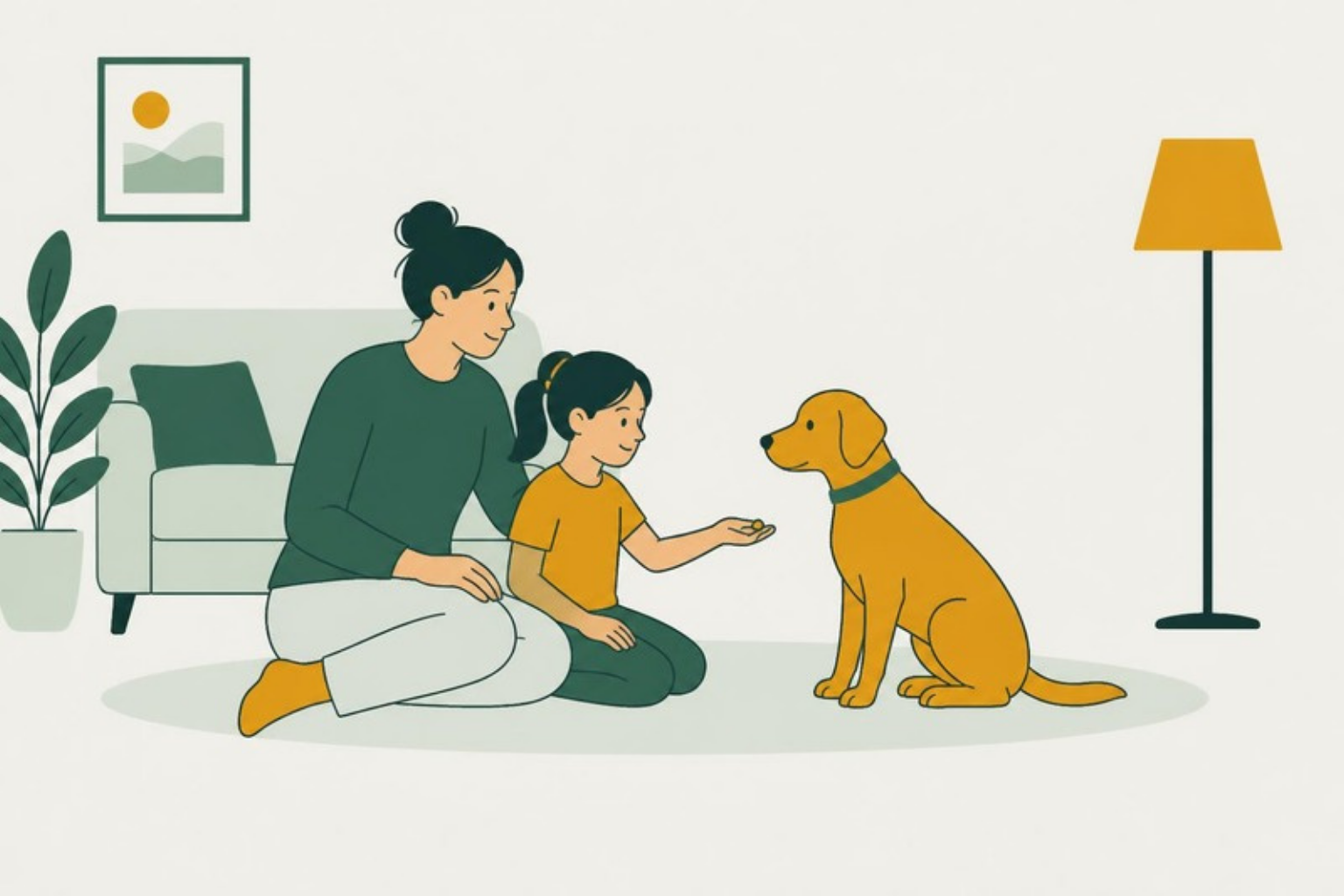
Kids and dogs can be great friends, and a dog who trusts the children in the family is a joy to live with. That trust is built by adults: by watching closely, setting simple house rules and teaching children how dogs say “I need a break.” This guide is for parents. It covers what children of different ages can safely do, the signs a dog wants space, how to introduce a new dog to a child, and how kids can take part in training without ever being put in charge of it.
Why do kids and dogs need clear rules?
Most bites to children don’t come from strange dogs. The CDC notes that children are more likely than adults to be bitten by a dog, that their injuries tend to be more severe, and that most bites to young children happen during everyday activities with familiar dogs. The AVMA says about half of dog bite victims are children.
Part of the reason is that young children and dogs read the world very differently. The ASPCA explains that young children can’t understand that they should leave the dog’s things alone, and may have difficulty recognizing a dog’s warning signs, or even find growling and barking amusing. Humane World for Animals adds that toddlers can be scary for dogs because of their unpredictable movements and sounds.
The CDC lists the moments when any dog is more likely to bite: when scared, nervous, eating, playing, or protecting toys or puppies. Good house rules simply keep children out of those moments.
The signs a dog wants space
Dogs usually warn before they bite. The ASPCA notes that dogs rarely bite without giving some type of warning first. Teaching the whole family to spot those signs early is one of the most useful things you can do.
| What you might see | What it can mean | Source |
|---|---|---|
| Yawning, lip licking or a quick tongue flick | Stress or discomfort | AKC, ASPCA |
| “Whale eye” (the whites of the eyes showing) | Anxious, worried or pressured | AKC |
| Looking away, turning away, moving away | Wants to avoid the situation | AKC, ASPCA |
| Ears back, tail tucked, body low or crouched | Anxious or scared | ASPCA, AVMA |
| Freezing or a sudden stiff body, hard stare | A warning; give space now | AKC, AVMA, Humane World |
| Growling, snapping, lip curling | “Leave me alone, right now” | AVMA, Humane World |
Two points are worth knowing. First, a wagging tail doesn’t always mean a friendly dog: the ASPCA notes that a wagging tail or a crouching body doesn’t always mean friendliness. Second, a growl is useful information. The AKC teaches children that growling always means they should back away, even though some dogs growl in play.
Adults should learn their own dog’s quieter signals, too. The AKC suggests knowing exactly how your dog signals stress, even subtle signs like yawning, so you can step in early. For dogs who already growl or stiffen around children, see what to do about adult dogs’ warning signs.
House rules for kids and dogs
These rules work best when every adult in the home uses them and when they’re phrased as what to do, not only what not to do.
| House rule | Why it matters | Source |
|---|---|---|
| A grown-up is always nearby when young kids and the dog are together | Never leave a baby or small child alone with a dog | AVMA, ASPCA, CDC |
| The dog has a child-free place to rest, like a crate or a gated room | Gives the dog somewhere safe to go when you can’t supervise | AKC, Humane World |
| Let a sleeping dog rest; leave the dog alone while eating or chewing | Don’t disturb a dog that’s sleeping or eating | AVMA, CDC, AKC |
| Pet gently, and only when the dog comes to you | Pet gently and only when the animal wants to be petted | Humane World |
| No riding, pulling ears or tails | Don’t let a child ride or sit on a dog or pull ears or tail | AKC, Humane World |
| If the dog walks away, let them go | Dogs may need quiet time when resting, eating, chewing or choosing to move away | AKC |
| If the dog growls, back away and call a grown-up | Growling always means back away | AKC |
| Ask the owner before petting any dog you don’t know | Teach children to ask permission first | AVMA |
The AKC also advises not to assume any dog is “safe” and “will never bite,” and to keep watching the relationship, since it can change over time. For the bite-prevention basics that apply to visitors as well as family, see preventing bites around children and visitors.
Prefer to watch? Five of these house rules, for parents, in a 45-second video:
Printable Family Dog Rules
We’ve turned these rules into a one-page sheet for the fridge, with short, positive rules for kids and a note for grown-ups on the signs a dog needs a break. Download the Family Dog Rules (PDF). It’s free and you don’t need to sign up.
How children can help train, step by step
Kids love helping, and dogs often learn that children are worth paying attention to. AKC trainer Kathy Santo describes how her son became the “gatekeeper” of everything the puppy wanted once he started asking for a sit before giving a cookie or throwing a ball. The adult stays in charge of training; the child gets a small, safe part of it.
Step 1: Start with a calm dog and an adult in charge
Choose a moment when the dog is relaxed, not right after a doorbell or a game of chase. Keep sessions short. The AKC notes that younger children need constant supervision, even when they know the rules.
Step 2: Let the child deliver the reward
The simplest job is handing over the treat when the adult says so. The AKC suggests showing kids the hand signals and verbal cues you’ve taught your dog so they can ask for the behaviors too and, depending on the child’s age, letting them deliver the rewards.
Step 3: Ask for a sit the dog already knows
Pick a cue your dog does reliably, like sit. Kathy Santo notes that a child as young as 5 could understand how to ask a dog to sit before giving a treat, with a parent there to help them follow through. Our basic dog commands guide shows how adults teach sit in the first place.
Step 4: Play a sniffing game together
Scent games are calm and fun for both. A child can help hide a treat while an adult holds the dog, then say “find it.” See the “find it” and box search games in our mental stimulation guide. The ASPCA also suggests hide-and-seek and trick training as good games for kids and dogs.
Step 5: End before things get exciting
Stop while the dog is still calm and interested. In the AKC’s account of a family raising kids and dogs together, children learned to calmly remove themselves if excitement rose among the dogs. Running and squealing can also invite chasing and nipping, especially from puppies; our guide on when puppies stop biting explains why.
Introducing a new dog or puppy to your child
The AVMA advises carefully managing introductions of children or a new dog to your household. A calm plan makes the first weeks easier for everyone:
- Set up the dog’s safe space first. A crate or a room behind a baby gate gives the dog a place to retreat. Humane World for Animals notes that a comfortable crate or safe room with a gate can make a world of difference.
- Let the dog choose to approach. The ASPCA advises never forcing your dog to interact with a toddler. Have your child sit quietly and let the dog come over, then pet gently for a moment.
- Give the child a calm job. The ASPCA suggests having young visitors toss a favorite toy or ask the dog to sit or lie down for treats.
- Keep it short, and separate when you can’t watch. The ASPCA notes it’s better to separate your dog and child than to put them in a risky situation, and the AKC suggests a child-free area like a crate whenever you can’t supervise.
Bringing home a puppy? Our puppy training guide covers the first weeks, including the crate and early socialization.
Common mistakes
- Trusting the family dog “because he’s always been fine.” The CDC advises supervising young children around dogs, even trusted family pets.
- Hugs and kisses. Teach gentle petting instead, and only when the dog chooses to come over (Humane World).
- Letting kids handle a dog who guards food or toys. That’s a job for adults and, often, a professional. See resource guarding.
- Punishing a growl. The ASPCA explains that a dog whose warnings are punished may stop warning and bite without notice.
- Expecting a child to be responsible for the dog. The AVMA calls it unrealistic to expect a child to be solely responsible for any pet’s care.
- Rough games. The AVMA advises avoiding highly excitable games like wrestling or tug-of-war, which can increase the risk of a bite.
What kids can do at different ages
Every child and every dog is different, so use this as a starting point, always with an adult nearby.
| Child’s age | What they can do with an adult | Leave to adults | Source |
|---|---|---|---|
| Toddlers (about 1–3) | Learn gentle touch and that a resting or eating dog needs quiet; watch from a distance while the dog eats | Any direct handling; keep a gate between toddler and dog when you can’t watch | AKC, Humane World, AVMA |
| Preschool (about 4–5) | Toss a treat on the floor when asked; help hide treats for “find it” | Training sessions, walks | AKC, ASPCA |
| School age (about 5–9) | Ask a calm dog for a known cue like sit, then give the treat; gentle brushing of a calm, willing dog | Dogs who guard, growl or react; leash walks without an adult | AKC (Santo), VCA |
| Older kids and teens | Help with short training sessions and daily care alongside an adult | Behavior problems, introductions to new dogs or visitors | AVMA; house rule |
The AVMA also suggests considering waiting until children are older than 4 before adopting a new dog.
When to call your veterinarian or a professional
Get help early. The ASPCA advises seeking professional help the first time a dog shows aggressive behavior toward anybody, even if no one is hurt, and, if your dog shows aggressive behavior around a toddler, keeping the dog away from the child and immediately contacting an animal behavior expert.
If your dog growls, snaps, stiffens or bites around children, or guards food, toys or places, start with your veterinarian. The ASPCA recommends a veterinary visit before anything else, to rule out medical issues that could cause or worsen aggression.
Then work with a qualified behavior professional, such as a veterinary behaviorist (DACVB), a Certified Applied Animal Behaviorist (CAAB) or a certified trainer (CPDT-KA) with experience treating aggression. Until then, keep the dog and children separated with gates or closed doors.
If you’re not sure where your dog’s behavior fits, our quiz suggests a first week of force-free steps for the problem that matters most.
Not sure where to start? Take the 7-question quiz and get the guide for your result by email.
Frequently asked questions
At what age can a child help train the dog?
AKC trainer Kathy Santo notes that a child as young as 5 can understand how to ask a dog to sit before giving a treat, with a parent supervising. Younger children can start learning gentle handling and respect for a dog's space, as the AKC describes.
Is it safe to leave my child alone with our dog?
Not with young children. The AVMA says never to leave a baby or small child alone with a dog, and the CDC advises supervising young children around dogs, even trusted family pets. The AKC adds that younger children need constant supervision, even when they know the rules.
My dog growled at my child. Should I punish the growl?
No. The ASPCA warns that punishing a growl can suppress the warning, so a dog may bite without one. Separate the dog and child, then talk to your veterinarian and a qualified behavior professional.
Should we wait to get a dog until our kids are older?
The AVMA suggests considering waiting until children are older than 4 before adopting a new dog, and managing introductions carefully whenever a child or a new dog joins the household.
Can kids hug the family dog?
It's safer to teach gentle petting instead. Humane World for Animals suggests teaching children to pet gently and only when the animal wants to be petted, and the AKC teaches kids to back away whenever a dog growls.
Sources
- Dog bite prevention — American Veterinary Medical Association
- About dogs and your health (Healthy Pets) — Centers for Disease Control and Prevention
- Dog bite prevention — ASPCA
- Dogs and babies — ASPCA
- How to help your dog love children — American Kennel Club (Stephanie Gibeault, MSc, CPDT)
- Dog training for kids — American Kennel Club (Kathy Santo)
- Raising kids and dogs together — American Kennel Club (Denise Flaim)
- Dog body language explained — American Kennel Club (Stephanie Gibeault, MSc, CPDT)
- Introducing your pet to your new baby — Humane World for Animals
- How to include kids in pet care — VCA Animal Hospitals