Puppy Peeing in the Crate: Causes and Fixes
Affiliate disclosure: we may earn a commission from the program mentioned below. How this works.
Short answer
Most puppies who pee in the crate are being asked to hold it longer than their bladder allows, have a crate big enough to use one end as a toilet, or feel stressed in the crate. Check the crate size, take your puppy out right before crating and on an age-based schedule, clean with an enzyme cleaner, never punish, and ask your vet if accidents are frequent.
Not sure where to start? Take the 2-minute quiz for a first-week plan.
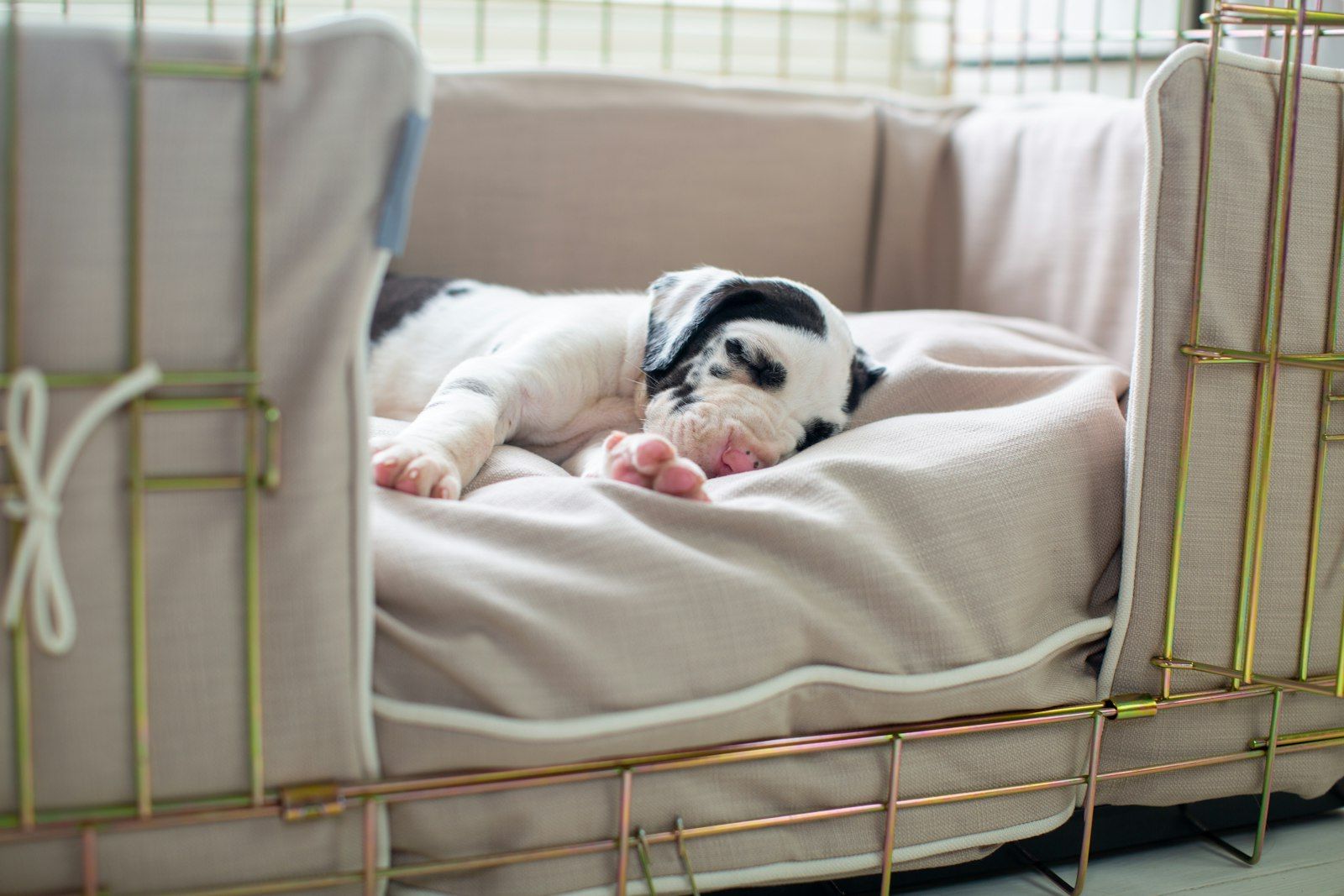
You open the crate in the morning and find a wet puppy and a wet bed. A crate usually helps with house training because, as VCA Animal Hospitals puts it, a puppy who learns that the crate is where they sleep won’t want to soil their bed. So when it keeps happening, something in the setup or the schedule is usually asking too much of your puppy. This guide walks through the common causes and a calm plan to fix them. For the full picture of potty training, start with our guide on how to house train a dog.
Why do puppies pee in the crate?
The AKC notes that a few accidents after your puppy has been in the crate too long may not be a concern, since most puppies get an upset stomach now and then. Frequent crate soiling is different: it usually signals a problem with your puppy’s health, routine or environment.
| Cause | What it looks like | What to do |
|---|---|---|
| Crate time longer than your puppy can hold it | Accidents after long stretches, or always at the same time of day | Shorten crate time and add potty breaks (Steps 3 and 4) |
| Crate too big | Your puppy pees in one corner and sleeps in another | Make the space smaller (Step 2) |
| No potty trip right before crating | Accidents soon after being crated | Watch your puppy go outside first (Step 3) |
| Too young to last the night | Accidents overnight, often in the early morning | Plan night-time breaks (Step 4) |
| Stress or fear in the crate | Whining, panting, trying to get out, accidents when left | Rebuild a positive crate habit (Step 5) |
| Soft bedding or pads to pee on | Bedding soaked or pushed over the mess | Try a short break from bedding (Step 6) |
| Health problems | Frequent accidents, accidents outside the crate too, or leaking while asleep | See your veterinarian (Step 1) |
How to stop your puppy peeing in the crate: step by step
Step 1: Rule out health problems
If your puppy is regularly having accidents in the crate, the AKC recommends a veterinary check to rule out problems such as urinary tract infections or other illness that could stop them holding their bladder. Digestive upsets, or a reaction to a medication or vaccine, can also affect bladder control.
Call your vet sooner if you notice the signs VCA lists for a urinary tract infection: frequent attempts to urinate, straining or crying when urinating, or blood in the urine. Also mention it if you find wet spots where your puppy has been lying or sleeping and they seem unaware of it. VCA describes this as the most common sign of urinary incontinence, and in young dogs one possible cause is a birth defect such as ectopic ureters, where the tube from the kidney doesn’t reach the bladder in the normal place. Only your vet can tell what’s going on.
Step 2: Check the crate size
VCA says the crate should be just large enough for your puppy to stand, turn around and lie down. With too much extra space, a puppy may turn half of the crate into a bathroom. The AKC adds that many crates come with dividers, so you can keep the space small and move the divider back as your puppy grows. Humane World for Animals suggests buying a crate that fits your dog’s adult size if they’re still growing, which is exactly when a divider helps.
Step 3: Take your puppy out right before crating
The AKC’s advice is to take your puppy outside before every crate session and watch to see that they go, every time. Don’t just open the door to the yard: go out with them, so you know their bladder is empty. Reward them right after they go.
If they’re still peeing in the crate, the AKC says they may need more frequent potty breaks, from you or a dog walker.
Step 4: Keep crate time within your puppy’s limits
Sources give slightly different rules of thumb for how long a puppy can hold it. The safest choice is the shortest one:
| Puppy’s age | VCA (potty training guide) | AKC rule of thumb | Humane World for Animals |
|---|---|---|---|
| 6 to 8 weeks | Out every 2 hours | ||
| 2 months | Out at least every 2 hours, even overnight (VCA crate guide) | About 3 hours | No more than 3 or 4 hours in a crate under 6 months |
| 3 months | About 3 hours | About 4 hours | No more than 3 or 4 hours in a crate |
| 4 to 6 months | Add about an hour per month of age | Age in months plus one | No more than 3 or 4 hours in a crate |
These are maximums for a calm puppy, not targets. Humane World for Animals explains that puppies under 6 months can’t control their bladders or bowels for longer than 3 or 4 hours, even during potty training. If your days are longer than that, it suggests changing your schedule, hiring a pet sitter or using doggie daycare to cut the time your puppy spends in the crate.
At night, VCA says your puppy’s crate should be where they sleep, and that early on you’ll need to take them out during the night. Many puppies aren’t comfortable staying in the crate all night until about 6 months old. Humane World suggests keeping the crate in or near your bedroom at first so you can hear your puppy when they need to go. Keep night trips short and boring: straight out, wait for them to go, reward quietly and straight back to the crate. Our guide to a puppy crying in the crate at night covers how to tell a potty cry from a settling-in cry.
Regular mealtimes help too. The AKC notes that most young puppies eat three times a day, and that feeding at the same times makes your puppy’s potty schedule easier to predict.
Step 5: Make the crate a place your puppy likes
The AKC says your puppy should see the crate as a quiet den, not a place that causes anxiety: a puppy who finds the crate stressful likely won’t relax enough to hold their bladder. Build good feelings with the steps from Humane World and the AKC:
- Drop treats near the crate, then just inside, then all the way in, without forcing your puppy in. Humane World says this can take a few minutes or several days.
- Feed meals in the crate, or give a food toy stuffed with a spreadable treat.
- Reward your puppy every time they go in willingly.
- Close the door for short periods while you’re home, and lengthen them slowly. Humane World notes that if your puppy whines to be let out, you may have increased the time too quickly.
- Never use the crate as punishment. VCA warns this can significantly set back crate training.
If your puppy panics in the crate, for example drooling, scratching at the door or trying to escape, Humane World cautions that a crate won’t solve separation anxiety and a distressed dog may injure themselves trying to get out. Read our guide on crates and separation anxiety and talk to your vet.
Step 6: Decide about bedding and pads
The sources pull in different directions here, so match the choice to what’s happening:
- If the bedding keeps getting soaked, the AKC suggests removing it for a short time. Some puppies prefer to pee on something soft, and some learn to cover the mess with their bedding.
- Once the crate stays dry, bring the bed back. Humane World for Animals and VCA both recommend a comfortable bed, and VCA suggests one that’s washable.
- Puppy pads in the crate: VCA’s crate guide suggests lining the crate with pads for easier cleanup, but its potty-training guide says that if you’re teaching your puppy to use pads, don’t line the crate with them, so your puppy isn’t confused about where to go.
Step 7: Clean up calmly and thoroughly
The AKC’s after-accident routine:
- Take your puppy outside to their potty spot right away.
- Clean the crate with a pet-safe, odor-neutralizing cleaner.
- Wash the bedding to remove any lingering smell.
VCA recommends a product with enzymes that break down urine. Leftover smells can draw your puppy back to the same spot.
Step 8: Keep a short log for a week
Write down when your puppy went into the crate, when they came out, and whether the crate was dry. A pattern usually shows up within a few days: accidents after the same stretch of time point to the schedule, accidents soon after crating point to a missed potty trip, and wet spots where they slept point to a vet visit.
| Date | In the crate | Out of the crate | Peed outside right before? | Crate dry? |
|---|---|---|---|---|
| Example: Mon | 9:00 a.m. | 12:30 p.m. | Yes | No, puddle in back corner |
Common mistakes
- Punishing accidents. The AKC says punishment can increase anxiety and make the problem worse, and VCA advises never to punish a puppy for mistakes in the house. A puppy who is anxious in the crate is less likely to hold it.
- A crate with room to spare. A crate sized for the adult dog, without a divider, leaves a toilet corner (VCA, AKC).
- Stretching crate time too fast. Use the shortest guideline for your puppy’s age, not the longest.
- Skipping the vet. Frequent accidents, accidents outside the crate too, or leaking while asleep need a veterinary check before more training.
- Releasing a whining puppy to play. Humane World suggests that if night-time whining continues, you use your potty phrase and, if your puppy gets excited, take them straight to their potty spot as a trip with a purpose, not playtime.
Crate accidents by age
Young puppies, about 8 to 12 weeks. Expect night-time trips and the occasional accident. VCA says a 2-month-old should go out at least every 2 hours, even overnight. Keep crate sessions short during the day.
Around 3 to 4 months. Your puppy can usually wait a little longer, but the limits above still apply. VCA says that by about 4 months, puppies should be learning to ask to go outside.
Around 6 months. VCA notes that most puppies are fully potty trained by about 6 months, and that many aren’t comfortable staying in the crate all night until about then. If your puppy isn’t making progress by 4 to 6 months, VCA recommends talking to your veterinary team.
Our puppy training guide covers the other things to work on at each stage.
When to call your vet or a professional
Talk to your veterinarian if:
- accidents in the crate are frequent, sudden, or come with diarrhea, lethargy or other signs of illness (AKC);
- your puppy strains, cries when peeing, pees very often or has blood in the urine (VCA);
- you find wet spots where your puppy has been sleeping and they seem unaware of it (VCA);
- your puppy isn’t making progress by 4 to 6 months (VCA);
- your puppy panics in the crate or is having accidents when left alone.
The AKC also suggests a behavior professional if accidents become frequent. If you see panic when your puppy is left, look for a certified separation anxiety trainer (CSAT) or ask your vet about a referral to a veterinary behaviorist.
If your older dog was reliably house-trained and is now having accidents, read why your dog suddenly pees in the house instead.
Not sure where to start? Take the 7-question quiz and get the guide for your result by email.
Frequently asked questions
Why is my puppy peeing in the crate all of a sudden?
The AKC says a few accidents after a long stretch in the crate, or with an upset stomach, may not be a concern, but frequent crate soiling usually points to a health, routine or environment problem. If a puppy who was keeping the crate dry starts having regular accidents, book a veterinary check to rule out problems such as a urinary tract infection.
Is my puppy peeing in the crate on purpose?
No. Puppies don't soil their crate out of spite. VCA Animal Hospitals' veterinary behaviorists explain that a dog's 'guilty look' most likely means they feel worried, and that scolding only confuses and possibly frightens them. The cause is usually a bladder that can't wait that long, a crate that's too big, or stress.
Why does my puppy pee in the crate at night?
Young puppies often can't hold it all night. VCA says a 2-month-old puppy should go out at least every 2 hours, even overnight, and that puppies may not be comfortable staying in the crate all night until about 6 months old. Keep the crate where you can hear your puppy and plan quiet night-time potty trips.
Should I take the bedding out of my puppy's crate?
The AKC suggests removing bedding for a short time if your puppy keeps soiling it, because some puppies prefer to pee on something soft or cover the mess with it. Humane World for Animals and VCA recommend a comfortable, washable bed, so put it back once the crate stays dry.
Should I put puppy pads in the crate?
VCA's advice differs by plan. Its crate-training guide suggests lining the crate with pads for easier cleanup, while its potty-training guide says that if you're teaching your puppy to use pads, avoid lining the crate with them so your puppy isn't confused about where to go.
Sources
- What to do if your puppy keeps going potty in the crate — American Kennel Club
- How to crate train your puppy — VCA Animal Hospitals
- How to potty train your puppy — VCA Animal Hospitals
- How to crate train your dog or puppy — Humane World for Animals
- Urinary incontinence (urethral incontinence) in dogs — VCA Animal Hospitals (Malcolm Weir, DVM; Tammy Hunter, DVM; Ernest Ward, DVM)
- Urinary tract infections (UTIs) in dogs — VCA Animal Hospitals
- Dog Behavior Problems - House Soiling — VCA Animal Hospitals (Ellen Lindell, VMD, DACVB; Debra Horwitz, DVM, DACVB; Gary Landsberg, DVM, DACVB)
Related guides
 How to House Train a Dog: Puppy and Adult Schedules
A force-free house training plan for puppies and adult dogs: schedules, crate use, handling accidents and medical problems to rule out if they persist.
 Why Your Dog Suddenly Pees in the House
A house-trained dog who suddenly pees indoors needs a vet check first. Learn the medical and behavioral causes, what to tell your vet and how to retrain.