Leash Reactivity: Why Dogs Lunge and Bark at Other Dogs
Short answer
Leash reactivity is when a dog lunges, barks or growls at other dogs on walks, usually from frustration or fear. Help your dog by avoiding close encounters while you train, working at a distance where they notice other dogs but stay calm, pairing each dog they see with treats, teaching a behavior such as watch me, and closing the distance slowly. Never punish lunging.
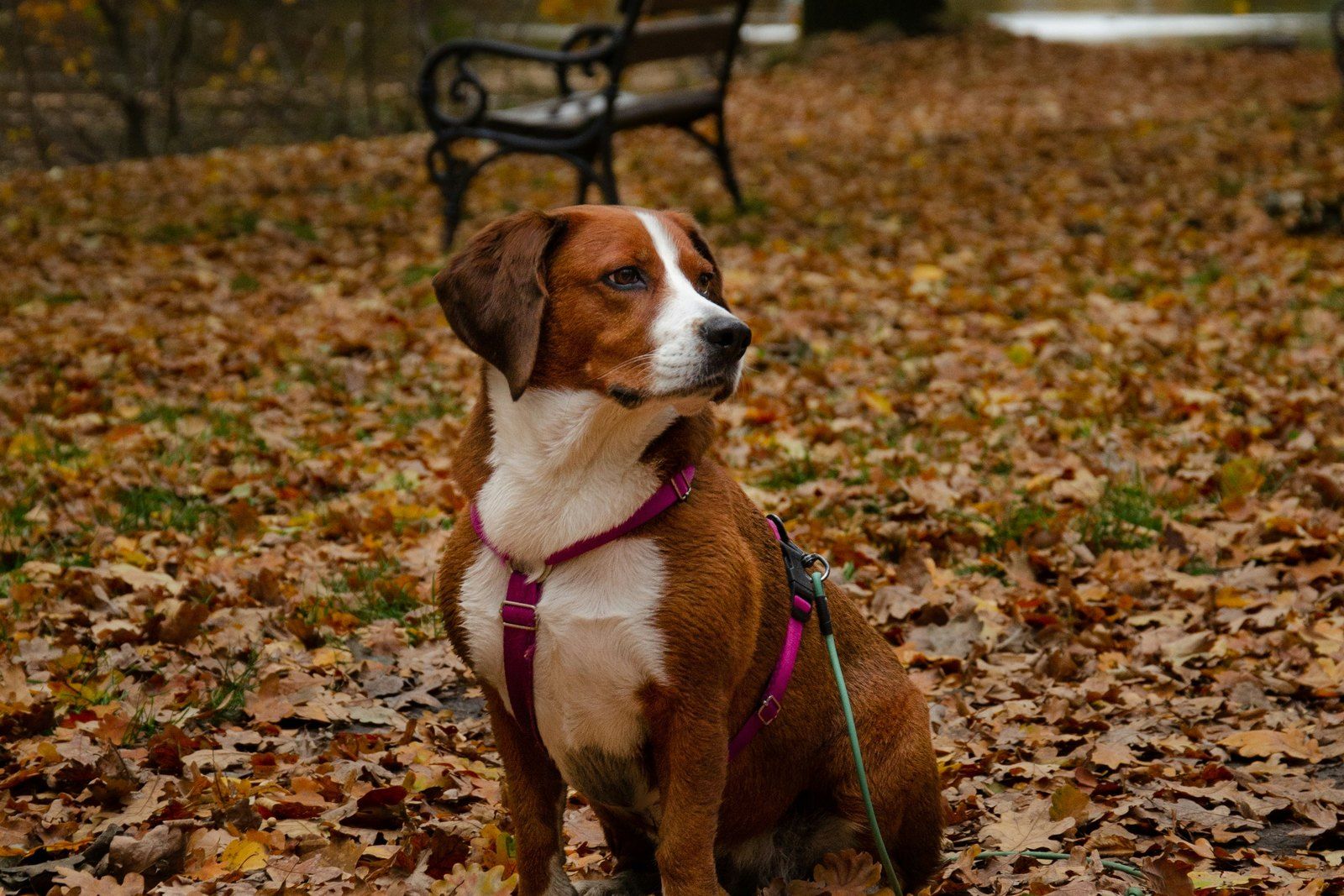
A dog who lunges and barks at every dog on the street can make walks feel like an ordeal: you scan every corner and cross the road constantly. The good news is that there is a clear, force-free plan to follow. This guide builds on our loose-leash walking guide, which covers pulling; here we focus on the dogs who don’t just pull, but explode.
What is leash reactivity?
The AKC describes reactive dogs as dogs who respond to normal, common occurrences with abnormal and excessive levels of arousal. On a walk, that often looks like lunging, barking or growling at the sight of another dog.
“Reactivity” and “leash aggression” are labels for what your dog does, not why. VCA Animal Hospitals’ veterinary behaviorists point out that these terms don’t specify the underlying motivation, and the motivation shapes the plan.
Why do dogs lunge and bark at other dogs on leash?
| Motivation | What the sources say | Clue |
|---|---|---|
| Frustration or excitement | The AKC calls these dogs “frustrated greeters”: the barrier the leash creates becomes too much for them | VCA notes they are often friendly with dogs they meet without a barrier |
| Fear | The AKC describes an “I’ll get it before it gets me” strategy: the dog tries to drive the other dog away first | Quieter signals first, such as leaning or looking away (VCA) |
| Aggression | Threatening or harmful behavior (AKC); needs a professional plan | Growling, snapping, a bite or an attempted bite |
The AKC lists fear as a common motivator, and names lack of socialization as a puppy and a previous bad encounter among the causes. VCA adds that even well-socialized dogs can develop aggression toward other dogs, because genetics and environment both play a part.
Many reactive dogs also learned that quiet signals don’t work. VCA explains that dogs may use signs such as leaning away, stepping away, looking away or lowering their body to try to end an interaction, and when those signs are repeatedly ineffective, they learn to skip them and reach for stronger ones, such as barking, growling and snapping.
How to help a reactive dog: step by step
Step 1: Rule out pain
VCA’s veterinary behaviorists note that a dog who reacts to other dogs could be experiencing pain, and recommend a thorough veterinary examination. Start there, especially if the reactivity is new.
Step 2: Stop the rehearsals
The AKC warns that a dog who keeps lunging on leash is developing a habit, and VCA notes that the more a dog practices aggressive behavior, the more difficult it is to change. While you train, avoid the close encounters that set your dog off:
- Walk when and where it’s quiet. VCA suggests avoiding other dogs by changing your route or the time of day you walk, and the AKC recommends planning walks for times when your dog is unlikely to meet their triggers.
- Take evasive action early. The AKC suggests crossing the street or making a 180-degree turn. Our leash-walking guide explains how to teach a smooth change of direction.
- Skip greetings and dog parks. VCA recommends preventing these interactions at first, and not returning a dog who has shown aggression in a group to dog parks or daycare until treatment is complete.
Step 3: Choose safe, humane equipment
- Front-clip harness. The AKC calls it a better choice than a buckle collar for a lunging dog, because the pressure lands on the chest instead of the throat.
- Head halter. VCA says head halters reduce pulling and can redirect your dog’s focus from triggers, letting you gently turn your dog’s head to reduce the risk of a stare or lunge. The AKC notes many dogs need help adjusting, and suggests clipping a second leash to the collar. Introduce it gradually, as our leash-walking guide describes, and never jerk the leash, which VCA warns could cause neck injury.
- Basket muzzle, if there’s any bite risk. VCA recommends a basket muzzle to prevent the possibility of a bite, and getting your dog used to wearing it first. It also warns that a muzzled dog’s space must still be respected, or frustration and aggression can escalate.
- No prong, choke or shock collars. The American Veterinary Society of Animal Behavior says trainers should avoid these tools.
Step 4: Find your dog’s comfortable distance
All the learning happens while your dog can still think. The AKC’s advice is to work far enough away that your dog doesn’t react, and Humane World for Animals puts it the same way: start far enough away that your dog doesn’t bark.
Learn your dog’s early signs, so you can add distance before a lunge. The AKC points to subtle signals such as lip-licking or pinned-back ears that show your dog’s emotions are shifting. Note the distance at which your dog can see another dog, stay loose and still take treats. That’s your starting point.
Step 5: Make other dogs predict good things
This is counterconditioning, and it works best with desensitization: gradual exposure at an intensity low enough that your dog stays calm. Our barking guide explains both techniques using a doorbell as the example. With other dogs:
- At your comfortable distance, the moment your dog sees another dog, start feeding small, tasty treats.
- Keep feeding while the other dog is in view, and stop when it disappears, as Humane World for Animals recommends. The other dog should predict the food.
- Repeat over many walks. The AKC describes the goal: your dog glances at the other dog, then turns right back to you.
Step 6: Teach a replacement behavior
The AKC suggests teaching a behavior that’s incompatible with lunging, such as “watch me” (your dog looks at your face), “touch” (your dog targets your hand with their nose) or “find it” (you drop treats at your feet). Teach it in a quiet place first and use plenty of treats, then add everyday distractions, then practice with another dog at a distance where your dog doesn’t react. When your dog looks at the other dog, ask for the replacement behavior and reward heavily.
VCA’s veterinary behaviorists also suggest teaching “heel” or “walk with me,” first with no dogs nearby, and a “sit, stay, relax” you can ask for while an approaching dog is still far enough away that your dog can easily focus on you.
Step 7: Close the distance slowly
Only when your dog is relaxed at the current distance, move a little closer, over many sessions. VCA lists panting, trying to escape, trembling, barking or getting excited, and no longer taking treats readily as signs you’ve moved too fast. End the session and go back to a greater distance. VCA warns that pushing on while a dog is uncomfortable can make the reaction stronger in future.
When another dog appears too close
Even with good planning, you’ll sometimes turn a corner and find a dog right there. Have a plan ready:
- Turn and go. Make your 180-degree turn, or cross the street, as the AKC suggests. Do it calmly and early.
- Scatter treats. A “find it,” with treats dropped at your feet, gives your dog something to do with their nose instead of staring (AKC).
- Don’t punish. The AKC says never to punish lunging: you’ll only make it worse. Get out of the situation, then go back to easier practice next time.
Walk log
Reactivity improves slowly, so write it down. A quick note after each walk shows progress that’s easy to miss:
| Date | Where and when | Closest distance to another dog | Your dog’s reaction | Notes and next step |
|---|---|---|---|---|
| Example: Sat | Park path, 7 a.m. | About 60 feet | Looked, turned back for treats | Same distance twice more, then try a little closer |
Common mistakes
- Punishing or correcting. VCA warns that punishment-based strategies can increase the intensity of aggression and risk redirected aggression, and the AKC says punishing lunging only makes the problem worse.
- Forcing greetings “to socialize”. VCA recommends preventing these interactions at first. Build calm at a distance instead.
- Working too close. If your dog is barking or refusing treats, they can’t learn. Add distance.
- Walking only on busy routes. Every reaction is a rehearsal. Quieter times and places buy you training time.
- Judging one walk at a time. Progress is easier to see over weeks, using your walk log.
Reactivity by age and background
Puppies: VCA notes that the sensitive period for socialization ends at about 16 weeks of age. Safe, positive experiences with calm dogs during that window help prevent problems later; our puppy training guide covers socialization step by step.
Adolescents and adults: reactivity can appear later, after a frightening encounter or through frustration on leash. The AKC lists a previous bad encounter among the causes.
Rescue dogs: you may not know their history. Start with a veterinary check and plenty of distance, and let your walk log show you what they can handle.
Reactivity can also show up as barking at other dogs from home or the car; our guide on how to stop a dog from barking covers the other barking situations.
When to get professional help
Get help from a qualified professional, such as a certified behavior consultant or a veterinary behaviorist, as the AKC recommends, if:
- your dog has bitten or tried to bite another dog or a person,
- your dog is too worked up to learn even at a distance,
- or you’ve followed the plan for several weeks without progress.
The AKC also suggests a professional dog trainer with leash reactivity experience, and VCA’s veterinary behaviorists recommend a behavior specialist to help assess dogs who are aggressive toward other dogs. Talk to your veterinarian too: they can check for pain and discuss whether other support might help your dog while you train.
Not sure where to start? Take the 7-question quiz and get the guide for your result by email.
Frequently asked questions
Why is my dog friendly off leash but reactive on leash?
VCA Animal Hospitals' veterinary behaviorists note that dogs with frustration-based aggression are often friendly with dogs they meet without a barrier. The leash stops them from greeting, and that frustration comes out as barking and lunging.
Is leash reactivity the same as aggression?
Not always. The AKC describes reactivity as an excessive level of arousal in response to normal, everyday situations, while aggression is threatening or harmful behavior. Reactivity can be driven by fear, frustration or excitement. If your dog has bitten or tried to bite, treat it as aggression and get professional help.
Should I let my reactive dog meet other dogs to socialize?
Not while you're training. VCA's veterinary behaviorists recommend preventing these interactions at first, and not bringing a dog back to group settings such as dog parks until treatment is complete if they've shown aggression there.
How long does it take to fix leash reactivity?
It varies. The AKC says some dogs make great progress in a matter of weeks, while others need professional help. VCA notes that desensitization can take a few hours, a few weeks or even a few months, depending on how strong the reaction is.
Should I use a prong or shock collar for a reactive dog?
No. The American Veterinary Society of Animal Behavior says trainers should avoid choke, prong and shock collars, and VCA warns that punishment can increase the intensity of aggression.
Sources
- How to stop a dog from lunging on a leash, at other dogs, or at people — American Kennel Club (Stephanie Gibeault, MSc, CPDT)
- Dog reactivity vs. aggression: causes, risks, and training — American Kennel Club (Stephanie Gibeault, MSc, CPDT)
- Dog Behavior Problems - Aggression - Unfamiliar Dogs - Diagnosis — VCA Animal Hospitals (Ellen Lindell, VMD, DACVB; Debra Horwitz, DVM, DACVB; Gary Landsberg, DVM, DACVB)
- Dog Behavior Problems - Aggression - Unfamiliar Dogs - Treatment — VCA Animal Hospitals (Ellen Lindell, VMD, DACVB; Debra Horwitz, DVM, DACVB; Gary Landsberg, DVM, DACVB)
- Dog Behavior Problems - Aggression - Getting Started - Safety and Management — VCA Animal Hospitals (Ellen Lindell, VMD, DACVB; Debra Horwitz, DVM, DACVB; Gary Landsberg, DVM, DACVB)
- Introduction to Desensitization and Counterconditioning — VCA Animal Hospitals
- How to get your dog to stop barking — Humane World for Animals (formerly The Humane Society of the United States)
- Head halter training for dogs — VCA Animal Hospitals
- Humane Dog Training Position Statement (2021) — American Veterinary Society of Animal Behavior
Related guides
 Loose-Leash Walking: How to Stop a Dog Pulling
Why dogs pull on the leash, and a step-by-step force-free plan to teach loose-leash walking, with gear that helps and fixes for lunging and stopping.
 Puppy Leash Training: Collar, Harness and First Walks
When to start leash training a puppy, how to choose and introduce a collar or harness, and how to plan safe first walks around vaccines and socialization.
 Dog Won't Walk on a Leash? Causes and Gentle Fixes
Why dogs stop, sit or lie down on walks, how to rule out pain and a badly fitted harness first, and a gentle plan to make walking worth it, never dragging.