How to Tire Out a Dog Indoors: Ideas by Situation
Affiliate disclosure: we may earn a commission from the program mentioned below. How this works.
Short answer
To tire out a dog indoors, mix brain work with a little safe movement: nose games like hide-and-seek and find the treat, a meal from a food puzzle, a few minutes of training, and an obstacle course or heeling around the furniture. Pick by situation: short potty trips on rainy days, nose work in small spaces, and a 10-minute plan on busy days, then help your dog settle.
Not sure where to start? Take the 2-minute quiz for a first-week plan.
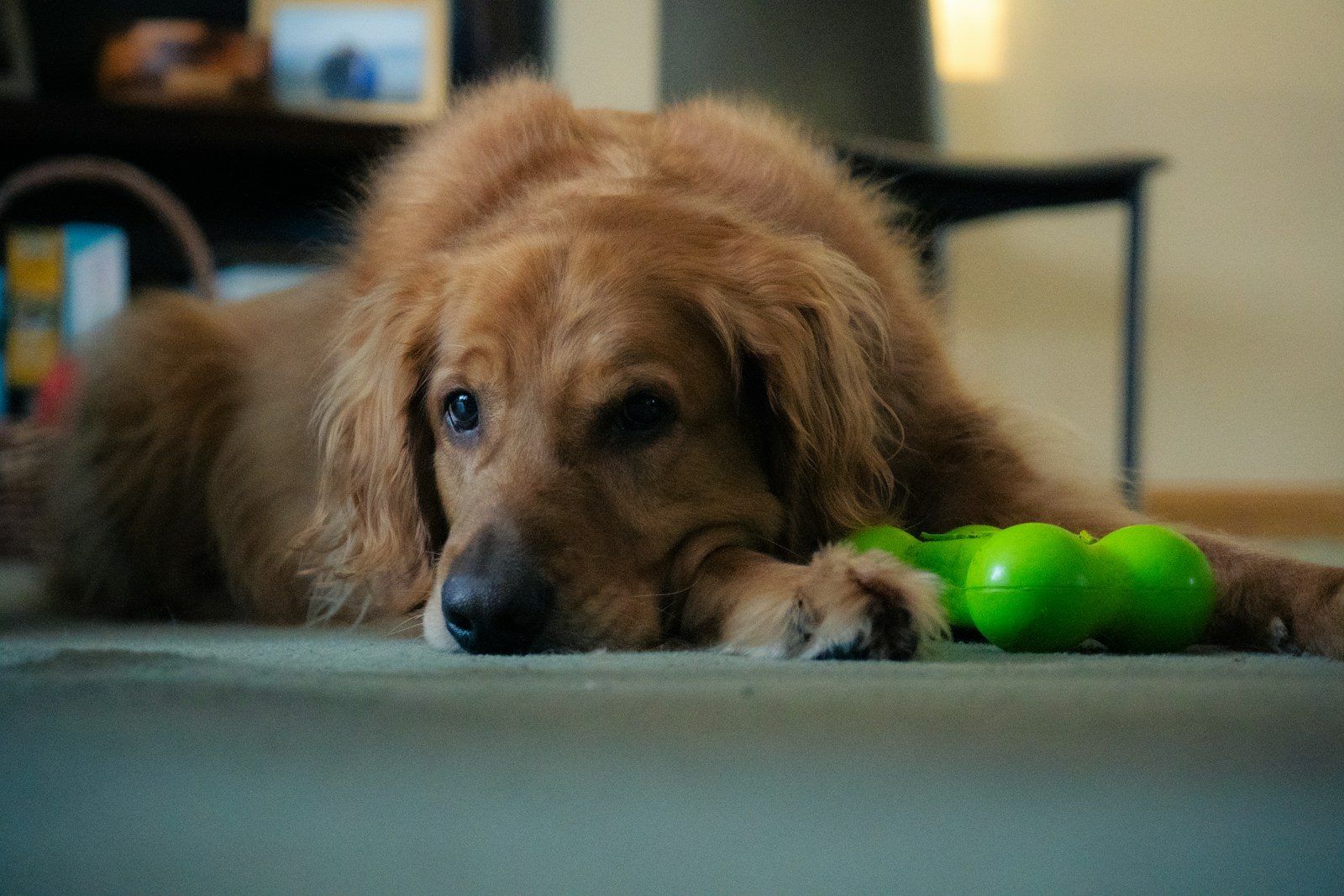
Some days a long walk just isn’t happening: it’s pouring, the apartment is small, or work has eaten the day. The good news is that a dog doesn’t need miles to feel satisfied. The AKC notes that mental exercise can be just as exhausting as the physical kind. This guide is organized by situation, so you can pick what fits today. For the full menu of brain games, with step-by-step instructions, see our guide to mental stimulation for dogs.
Why can a dog get tired without a long walk?
Dogs get tired from using their nose and brain, not only their legs. The AKC says mental exercise can be just as exhausting as physical exercise, and VCA Animal Hospitals’ veterinary behaviorists note that play gives dogs physical exercise, mental stimulation and social interaction at the same time. Sniffing matters too: VCA says the chance to sniff enriches the lives of all dogs.
How much your dog needs depends on their age, stage of development, behavior and physical health, VCA explains. Some dogs are ready for more after a long jog; others are content after a short walk around the block.
Pick by situation:
| Your situation | What fits best | Time | Details in our guides |
|---|---|---|---|
| Rain, snow or heat | Short potty trip, then nose games and an indoor course | 20 to 30 minutes, split up | Find it, scent games |
| Small apartment | Nose work, a meal from a puzzle, heeling around furniture | 10 to 20 minutes | Retire the food bowl |
| Busy day | A puzzle meal, five minutes of training, a chew, then settle | About 10 minutes of your time | Long-lasting chew, teach settle |
| High-energy dog | Treadmill (if trained), a breed-matched “job”, then an off switch | Varies | Play-and-settle game |
How to tire out your dog indoors, by situation
Before you start: three safety checks
- Watch for tiredness. VCA says to stop and offer rest if your dog seems out of breath or repeatedly tries to sit or lie down. Signs of overdoing it afterward include slower responses to cues, irritability, overexcitement, and difficulty lying down or getting up.
- Protect growing joints. For puppies, VCA advises avoiding games that involve jumping down from heights, leaping high into the air, or running fast and stopping suddenly.
- Keep excitement in check. VCA warns against play that leads to excessive arousal. A calmer game is better than a frantic one.
Situation 1: Rainy, snowy or very hot days
Keep outdoor trips short. The AKC’s advice for dogs who dislike bad weather is not to force them out for long periods. If your dog just needs to relieve themselves, head home as soon as they go. The AKC also suggests walking at the best time of day for the weather (early morning or night when it’s hot), and choosing routes under trees or covered walkways when it rains.
Try weather gear gradually, if your dog needs it. The AKC suggests letting your dog explore a coat or booties at home, treating them for interest, and putting the gear on for short periods at first. Only use it with supervision, and take it off if your dog seems distressed.
Then bring the fun inside:
- Hide-and-seek. Once your dog has a reliable stay, ask them to stay, go and hide in another room, and call their name. Celebrate when they find you (AKC). VCA’s version works without a stay: one person distracts the dog while another sneaks away to hide.
- Hidden treasure. Put a treat under one of several upturned boxes or containers and let your dog sniff out the right one (AKC). Our pillar’s three scent games take this further.
- An indoor obstacle course. The AKC suggests broken-down boxes to crawl through, chairs to weave around and low stacks of books to step over. Keep jumps low, and skip them for puppies.
Situation 2: A small apartment
You don’t need a long hallway. In a small space, focus on the nose and the brain:
- Feed a meal the slow way. A food puzzle or snuffle mat turns a meal into a search. Our pillar explains how to retire the food bowl safely.
- Use what you have. The AKC suggests hiding treats in shoeboxes, egg cartons or cardboard tubes, and letting your dog’s nose and brain go to work. Supervise while your dog plays.
- Heel around the furniture. The AKC suggests moving small tables or chairs to create a course for practicing heeling. Weave between them, changing pace so your dog concentrates on following you.
- Practice everyday skills. The AKC notes that dogs get some exercise from practicing sit, down, come and the other Canine Good Citizen skills. Pick one skill your dog finds hard and work on it for a few minutes a day.
- Teach “go to your mat.” VCA describes it as a fun game with real-life uses: toss a treat onto the mat, step away, and toss the next one from a little farther away.
Situation 3: A busy day with 10 minutes to spare
When time is short, let the activities run without you:
| When | Activity | Your time |
|---|---|---|
| Breakfast | Meal from a food puzzle or scattered for a search | 1 minute |
| A break in your day | Two or three very short training sessions | 5 minutes |
| Evening | A long-lasting chew on a mat | 1 minute to set up |
| Before bed | A quick game of find it, then settle | 3 minutes |
The AKC points out that puzzle toys can keep a puppy busy when you don’t have time to play, as long as they’re safe for their play style, and the same idea works for adult dogs. It also says training is a great way to provide both physical exercise and mental stimulation. Keep each session short and stop while your dog still wants more.
Situation 4: A high-energy dog
A treadmill, for healthy adult dogs only. Skip it for puppies. Mikkel Becker, a Fear Free dog behavior counselor, told Inverse that it may not be a good idea to walk puppies on a treadmill because their bones are still growing, which fits VCA’s advice to protect puppies’ growing bones and joints. Inverse also notes that a treadmill may be too strenuous for some dogs with medical conditions, so check with your vet first.
For a healthy adult dog, the AKC calls a treadmill a good option when the weather is bad. Train it carefully:
- Build up in small steps with treats, starting with simply getting on and off. Never force your dog onto the equipment (AKC, Whole Dog Journal).
- Let your dog hear the motor before the belt moves, then start slowly (AKC).
- Always hold the safety cord so you can stop the machine if there’s a problem (AKC).
- Stay with your dog for the whole session, and never tie your dog to the treadmill: Whole Dog Journal warns this can become dangerous. Inverse adds that toenails or fur can get caught in the machine.
- Start with five-minute workouts and build up a few minutes a week, to a maximum of 20 minutes (AKC).
The AKC adds that a treadmill is physical exercise only: there’s no sniffing, so it doesn’t provide the same mental stimulation as going out.
Give them a job. The AKC suggests thinking about what your dog’s breed was developed to do: terriers love to dig, and herding breeds enjoy activities that let them control movement. Our pillar covers matching games to your dog’s breed.
Build an off switch. More activity isn’t always the answer. If your dog gets more wound up the more you play, teach them to calm down between games with our play-and-settle game.
Common mistakes
- Revving your dog up. VCA advises avoiding play that leads to excessive arousal. Mix active games with calm ones and end with a settle.
- Ignoring signs of tiredness. Stop and offer rest if your dog is out of breath or keeps trying to lie down (VCA).
- Jumps and sudden stops for puppies. VCA warns these can harm growing bones and joints.
- Forcing equipment. The AKC’s rule for treadmills and weather gear is the same: never force it, build up with treats, and stop if your dog seems distressed. Never tie a dog to a treadmill (Whole Dog Journal).
- Treating physical exercise as the whole answer. A treadmill doesn’t replace sniffing (AKC). Make sure some of each day’s activity uses your dog’s nose.
By age and breed
Puppies. The AKC says puppies need both physical exercise and a daily brain workout, but you shouldn’t overdo workouts because their bones are still growing. Ask your vet if you’re unsure how much is right. Games like hide-and-seek, tossing kibble around the room and hidden treasure suit puppies well (AKC), and VCA’s “find it” style games work indoors too. Leave the treadmill until your puppy is fully grown.
Adult dogs. Most of the ideas above suit healthy adults. VCA advises checking with your veterinarian before introducing rigorous exercise, since it requires a sound body and a healthy heart and lungs.
Senior dogs. Choose gentle nose and brain games over physical ones, and watch closely for the signs of overexertion above. Our pillar has more on mental stimulation for older dogs.
Short-muzzled breeds. VCA notes that dogs such as French Bulldogs have different physical abilities from longer-legged, longer-muzzled breeds, and suggests asking your veterinary team or a canine fitness trainer to help plan safe exercise.
When to get help
Talk to your veterinarian if:
- your dog seems unusually tired, out of breath or stiff after activity, or has trouble lying down or getting up (VCA);
- you want to start more vigorous exercise, especially with a puppy, a senior or a short-muzzled dog (VCA);
- your dog can’t settle even with plenty of activity, or restlessness is new.
If your dog chews, digs or destroys things mainly when left alone, boredom may not be the cause. Read our guide to a dog who is destructive when left alone before adding more games.
Not sure where to start? Take the 7-question quiz and get the guide for your result by email.
Frequently asked questions
How can I tire out my dog without a walk?
Combine brain work and some movement. The AKC notes that mental exercise can be just as exhausting as the physical kind. Try hide-and-seek, hiding a treat under one of several upturned boxes, a meal from a food puzzle, a few minutes of training, or heeling around chairs. Short sniffing breaks outside still help when you can manage them.
Does mental stimulation really tire a dog out?
Yes. The AKC says mental exercise can be just as exhausting as physical exercise, and that cognitive challenges help keep puppies entertained. Our mental stimulation guide explains the main types: sniffing, chewing, foraging, problem-solving and learning.
Is a treadmill a good way to exercise a dog indoors?
For healthy adult dogs, with careful training. The AKC suggests building up step by step with treats, holding the safety cord, and starting with five-minute workouts that build to a maximum of 20 minutes. Whole Dog Journal says never to force or tie your dog to the treadmill and to always supervise. It isn't for puppies, whose bones are still growing, and it doesn't replace sniffing.
How do I tire out a puppy indoors?
Use short games and training. The AKC suggests hide-and-seek, tossing kibble around the room and hiding a treat under one of several boxes, and reminds owners not to overdo physical workouts while bones are growing. VCA advises avoiding games where puppies jump down from heights, leap high or stop suddenly.
Sources
- Fun indoor games to play with your dog — American Kennel Club
- Indoor dog training: how to keep up dog training if you're stuck inside — American Kennel Club
- How to train your dog to walk in rain or snow — American Kennel Club
- How to use a treadmill to exercise your dog — American Kennel Club
- Dog treadmill choices — Whole Dog Journal (Mikkel Becker)
- Should you exercise your dog on a treadmill? Here's what veterinarians say — Inverse (Tara Yarlagadda)
- Keep your puppy active and out of trouble with stimulation and exercise — American Kennel Club
- Dog Behavior and Training: Play and Exercise — VCA Animal Hospitals (Ellen Lindell, VMD, DACVB; Monique Feyrecilde, LVT, VTS (Behavior); Debra Horwitz, DVM, DACVB; Gary Landsberg, DVM, DACVB)
Related guides
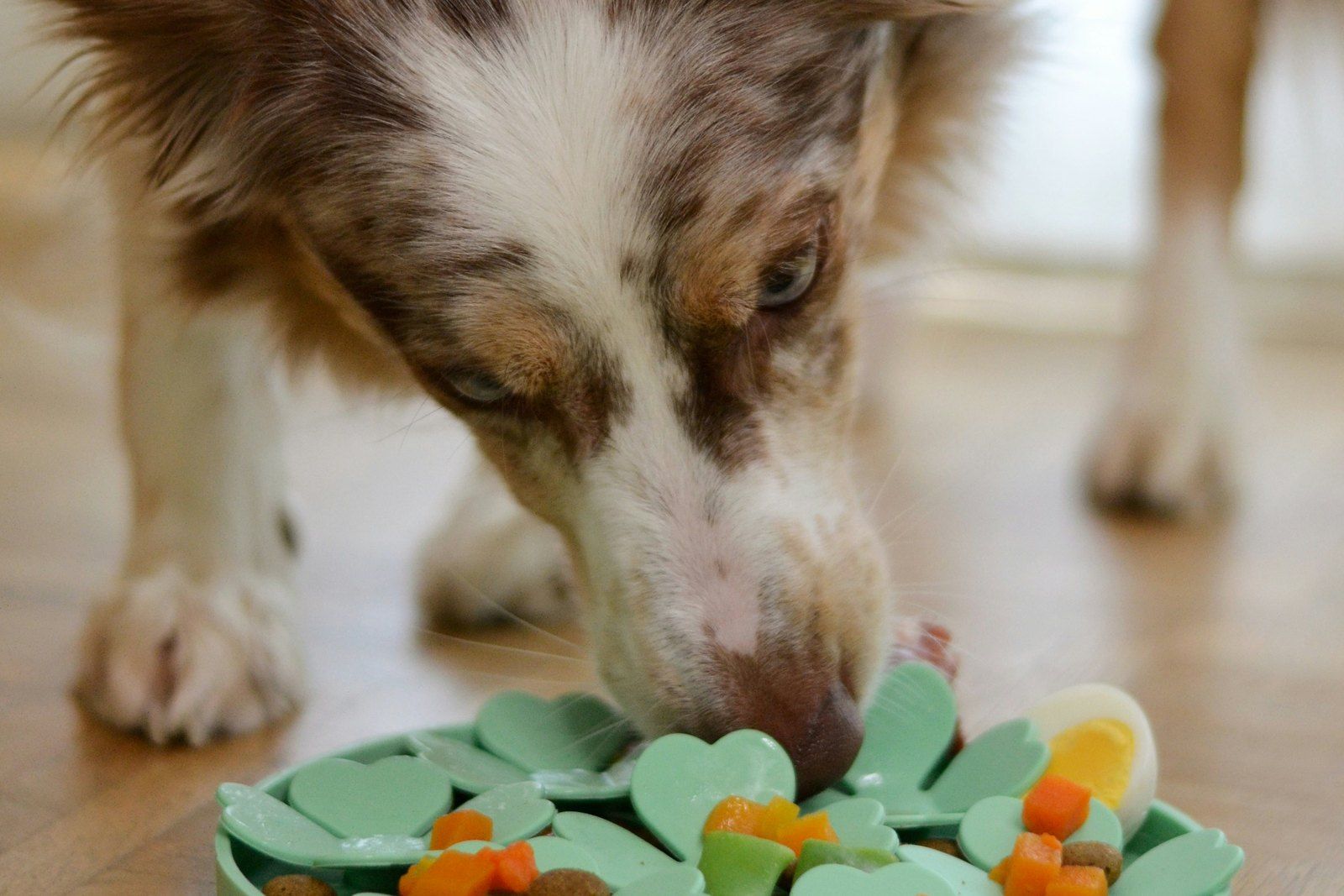 Mental Stimulation for Dogs: Easy Games and Enrichment
Why dogs need brain work as well as walks, plus easy sniffing games, food puzzles and training games for small homes, busy owners and active breeds.
 How to Teach a Dog to Settle and Relax
A step-by-step, force-free plan to teach your dog to settle on a mat and switch off, plus a play-and-pause game that builds an off switch for busy dogs.