Dog Destroys the House When Left Alone? Start Here
Affiliate disclosure: we may earn a commission from the program mentioned below. How this works.
Short answer
Dogs destroy things when left alone for three main reasons: separation anxiety, boredom, or a chewing phase in puppies and young dogs. Film an absence to find out which. Damage at doors and windows with signs of distress points to anxiety; chewing that also happens when you're home points to boredom or a chewing phase. Never punish damage after the fact.
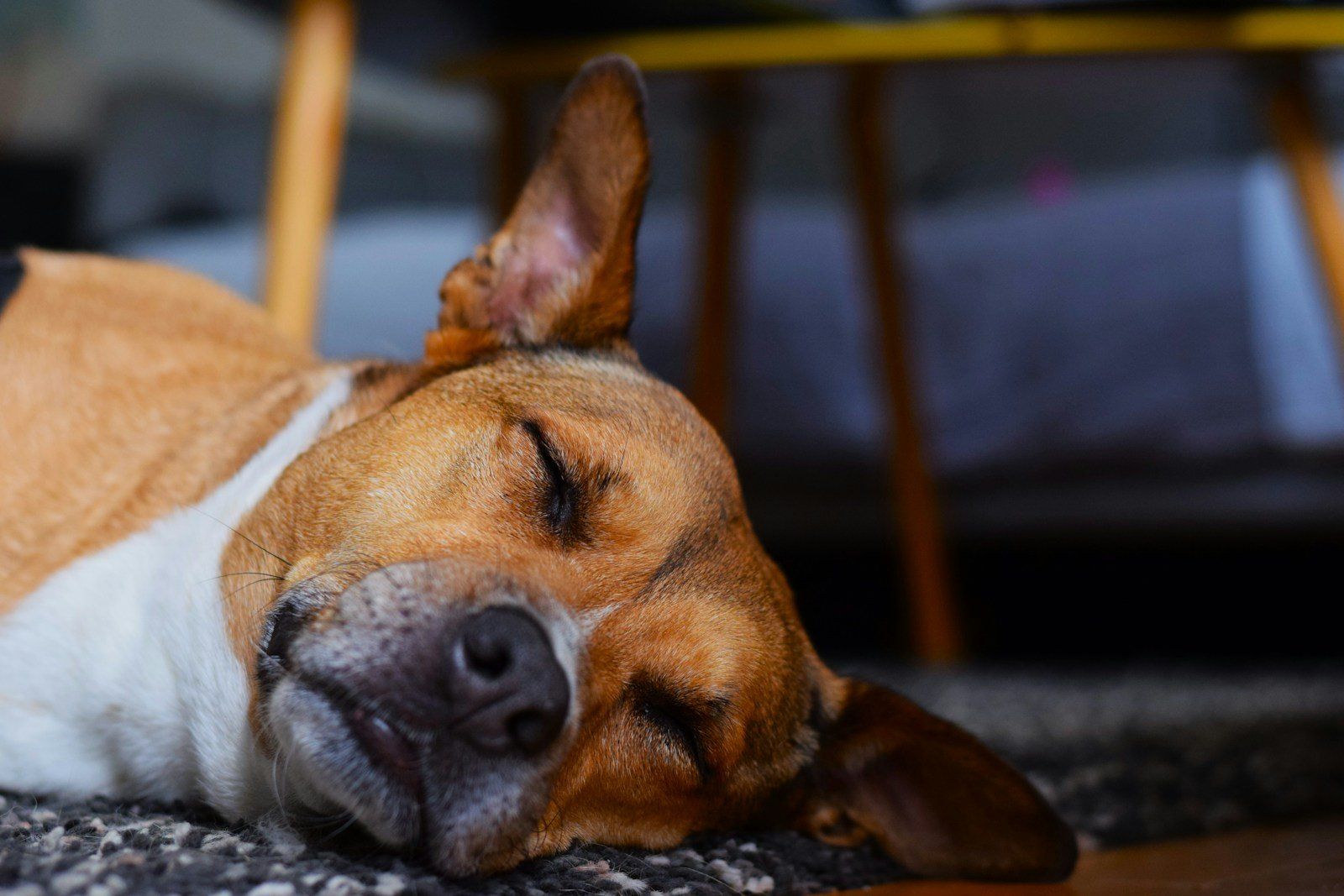
Coming home to shredded cushions, a chewed door frame or scratched-up walls is upsetting, and it’s natural to wonder whether your dog did it on purpose. They didn’t. Destruction when a dog is alone usually has one of three causes, and each one needs a different plan. This guide helps you work out which one you’re dealing with, keep your dog and your home safe in the meantime, and find the right next step.
Why do dogs destroy things when left alone?
| Likely cause | What the damage looks like | When it happens | Other clues |
|---|---|---|---|
| Separation anxiety | Doors, windows, crates and other exit points; your belongings (ASPCA, VCA) | Almost exclusively when your dog is alone (VCA) | Whining, barking, pacing, restlessness, accidents (ASPCA); frantic escape attempts, sometimes with injuries |
| Boredom | Furniture, shoes, pillows, toilet paper, trash (AKC) | When alone, and often when unsupervised at home too | Your dog doesn’t appear anxious; they’re restless and looking for something to do (ASPCA, AKC) |
| Chewing phase in puppies and young dogs | Anything within reach | Whether you’re home or not (ASPCA) | Teething, which the ASPCA says usually ends by about six months; curious young dogs |
The ASPCA lists two less common causes worth ruling out: a dog on a calorie-restricted diet may chew and destroy things looking for food, and some dogs suck on fabric, which some experts link to early weaning.
What to do: step by step
Step 1: Film an absence
A video is the fastest way to tell the causes apart. VCA’s advice is to set up a camera to see what happens when you leave. Set up a phone, laptop or pet camera and leave as you normally would, for the length of a typical errand. Then watch:
- When does trouble start? Note the minute your dog first shows stress or starts chewing. Our separation anxiety guide uses that number as the starting point for training.
- Where is it focused? The ASPCA notes that escape attempts by dogs with separation anxiety can cause household destruction, especially around exit points like windows and doors.
- How does your dog look? Panting, pacing, whining, drooling or trying to get out suggest distress. A relaxed dog happily pulling the stuffing out of a cushion suggests boredom or a chewing habit.
- Does it also happen when you’re home? The ASPCA notes that many young dogs chew or dig destructively while their guardians are home as well as when they’re away. That’s not separation anxiety.
Step 2: Keep your dog and home safe while you work it out
- Don’t punish. The ASPCA says not to show your dog the damage and scold or punish them after the fact. VCA advises never punishing your dog for damage or accidents you find when you come home: just clean up quietly, ideally with your dog out of the area.
- Dog-proof. Put shoes, cables, cushions and trash out of reach, and give your dog appropriate chew toys, as the ASPCA recommends.
- Use a safe space carefully. A puppy-proofed room or pen works for many dogs, but the ASPCA warns that for some anxious dogs a crate causes added stress, with heavy panting, excessive drooling and frantic escape attempts. If your video shows your dog trying to escape a crate, gate or room, VCA notes that this needs a specific plan, not more confinement.
- Watch for injuries. The ASPCA warns that escape attempts by dogs with separation anxiety can be extreme and result in self-injury. If your dog is hurt after an absence, call your veterinarian.
Step 3: Follow the plan that fits the cause
If it’s separation anxiety
The damage is a symptom of distress, so the treatment is about helping your dog feel safe alone, not about chewing. In short: stop long absences while you train, make departure cues boring, practice absences short enough that your dog stays relaxed, and stretch them very gradually. Our separation anxiety guide walks through each step, with an example progression and a session log. VCA advises talking to your veterinarian if separation-related problems appear suddenly.
If it’s boredom
The ASPCA notes that bored dogs look for ways to entertain themselves, and chewing is one option. The AKC recommends more vigorous exercise, puzzle toys and rotating toys so your dog stays interested, and suggests a dog walker, pet sitter or daycare if your dog is alone for long stretches. Before you leave, try a sniff walk and a food puzzle. Our guide to mental stimulation has games and a sample week.
If it’s a chewing phase
For teething puppies, the ASPCA suggests offering appropriate chew toys and items such as a frozen washcloth or ice cubes to soothe sore gums, and keeping temptations out of reach. Young dogs who chew whether you’re home or not need supervision, a safe space when you can’t watch, and plenty of chew toys. Our puppy training guide covers safe spaces and first routines.
Step 4: Track what changes
A simple record shows whether your plan is working:
| Date | How long you were out | What you left (toy, chew, puzzle) | Damage or signs on video | Next step |
|---|---|---|---|---|
| Example: Mon | 45 minutes | Stuffed food toy | Ate the toy, then slept; no damage | Same setup tomorrow |
Common mistakes
| Mistake | Why it backfires | Do this instead |
|---|---|---|
| Scolding your dog over the damage | They can’t connect it with what happened earlier (ASPCA, VCA) | Clean up quietly and look at the video |
| Assuming it’s boredom without checking | Extra toys won’t help a dog who is panicking | Film an absence first |
| Crating an anxious dog to stop damage | Some dogs panic more when confined, and may hurt themselves (ASPCA) | Test the crate on video first |
| Leaving a young dog loose in the house too soon | Young dogs often chew destructively whether you’re home or not (ASPCA) | Dog-proof and use a safe space |
| Only adding more walks | Exercise helps, but the ASPCA notes that moderate and severe separation anxiety needs gradual desensitization | Match the plan to the cause |
Destruction at different ages
Puppies chew to explore and to soothe teething, which the ASPCA says usually ends by about six months. Supervise, dog-proof and give plenty of appropriate chews.
Adolescents and young adults may keep chewing destructively after teething, often both when you’re home and when you’re away (ASPCA). They usually need more exercise, more brain work and a safe space when alone.
High-energy working breeds often need more than a daily walk. VCA notes that Border Collies can become anxious or destructive without enough stimulation, and the AKC warns that a German Shepherd who isn’t exercised enough will become frustrated and likely to develop undesirable behaviors. Our breed pages for the Border Collie and German Shepherd explain what each needs.
Adult and senior dogs who suddenly start destroying things when alone deserve a veterinary check, as VCA advises for sudden separation-related problems. Changes such as a move or a new schedule can also trigger separation problems, as our separation anxiety guide explains.
When to get help
Contact your veterinarian and a qualified behavior professional soon if your dog injures themselves trying to escape, destroys exits such as doors and window frames, or panics every time you leave. Our separation anxiety guide explains when to get help urgently. The AKC also suggests a trainer or behaviorist if you’re unsure whether you’re seeing boredom or distress.
Not sure where to start? Take the 7-question quiz and get the guide for your result by email.
Frequently asked questions
Is my dog destroying things out of spite?
No. Dogs don't destroy things to get back at you. The ASPCA and VCA both advise never punishing damage you find when you come home: your dog can't connect it with something they did earlier, and it adds stress.
How can I tell if it's separation anxiety or boredom?
Film an absence. The ASPCA notes that dogs with separation anxiety usually chew only, or most intensely, when left alone, and show other signs such as whining, barking, pacing, restlessness or accidents. Bored dogs usually don't appear anxious and may chew when you're home too.
Should I crate my dog so they can't destroy anything?
Only if they're already relaxed in the crate. The ASPCA warns that for some dogs a crate adds stress, with heavy panting, drooling and frantic escape attempts. Film your dog in the crate before relying on it.
When does puppy chewing stop?
The ASPCA says the teething phase usually ends by about six months of age. Some young dogs keep chewing destructively after that, whether you're home or not, which is a chewing habit rather than separation anxiety.
Sources
- Destructive chewing — ASPCA
- Separation anxiety — ASPCA
- Dog Behavior Problems - Separation Anxiety — VCA Animal Hospitals
- Bored dogs: how to recognize doggy boredom and help — American Kennel Club
- Border Collie — VCA Animal Hospitals
- German Shepherd Dog — American Kennel Club
Related guides
 Dog Separation Anxiety: A Step-by-Step Training Plan
A gradual, force-free plan to help a dog with separation anxiety feel safe home alone: short practice absences, boring departures and when to see your vet.
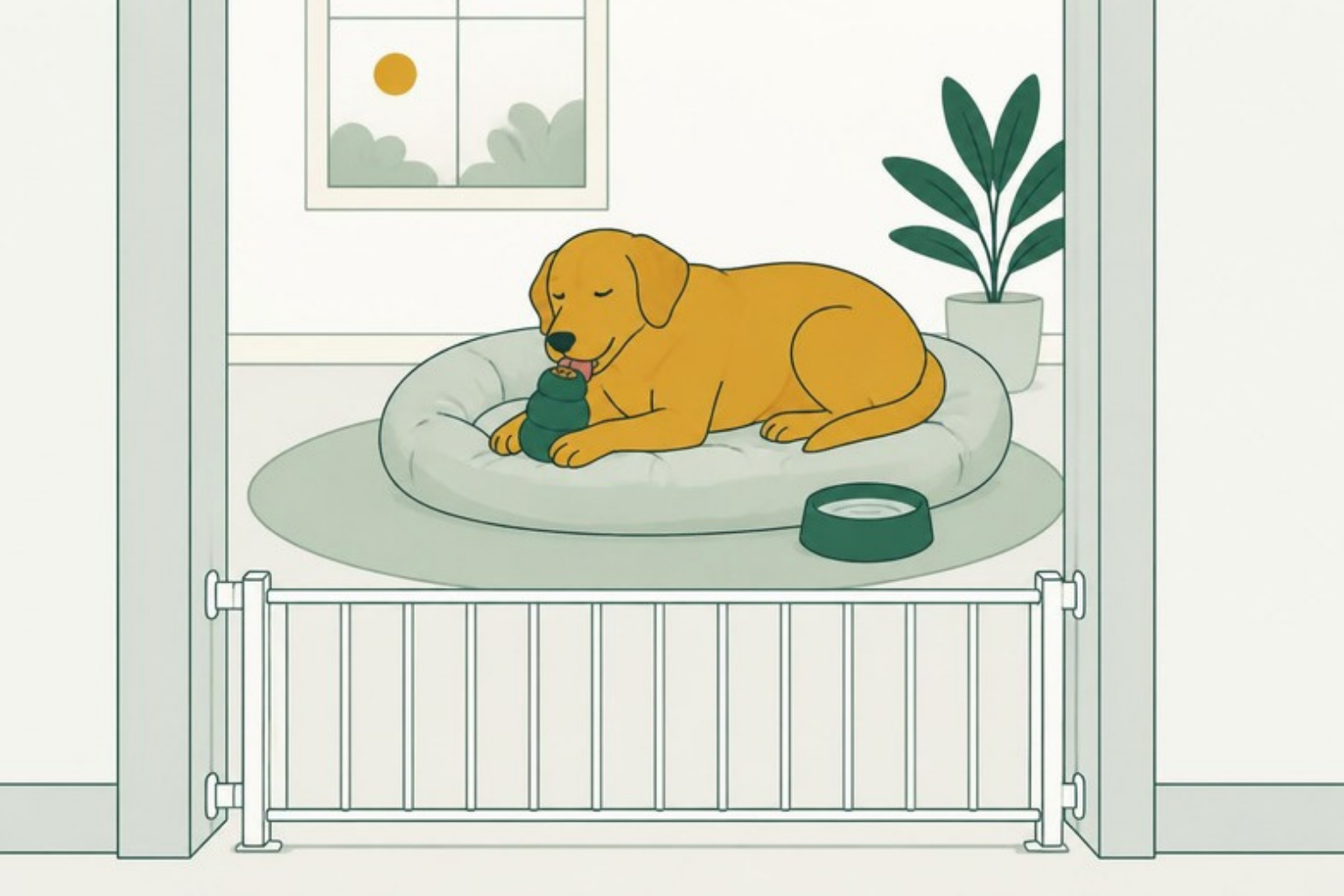 Crates and Separation Anxiety: Help or Harm?
Should you crate a dog with separation anxiety? When a crate helps, when it makes panic worse, the signs to film for, and safer setups while you train.
 Signs of Separation Anxiety in Dogs and What to Do
The signs of separation anxiety in dogs, when they show up, what else can look like it, and how to check your own dog with a simple video before you start.