How to Teach a Dog to Settle and Relax
Affiliate disclosure: we may earn a commission from the program mentioned below. How this works.
Short answer
To teach a dog to settle, sit beside a mat after your dog has exercised and been to the toilet, and quietly drop a treat between their paws whenever they lie down. Reward more relaxed postures, like rolling onto a hip or resting their chin, add the word settle as they soften, then slowly space out the treats and add distance and distractions.
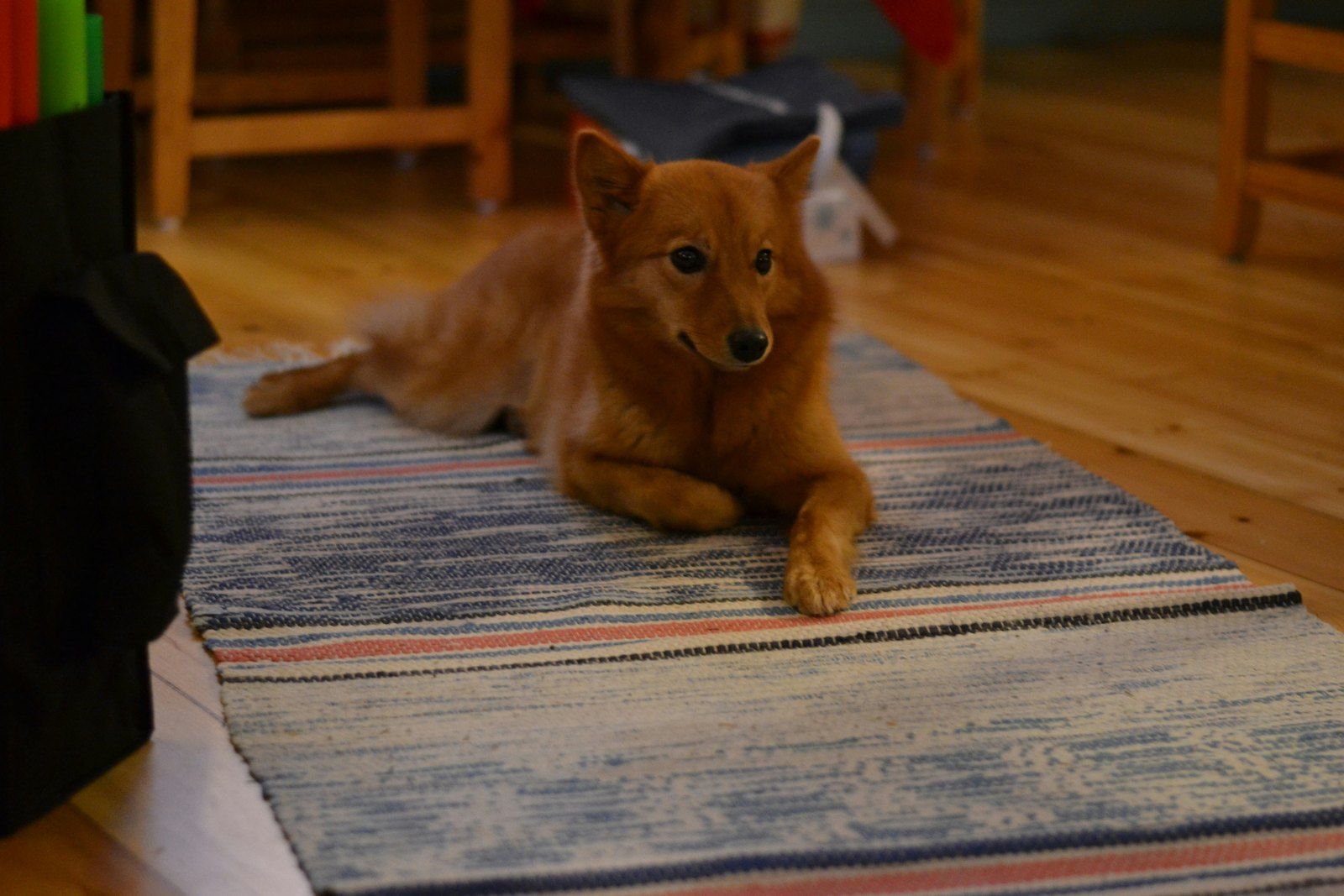
Some dogs can go all day and still bounce off the walls in the evening. Others follow you from room to room, unable to rest unless you do. A dog who can settle, lie down and switch off on their own is easier to live with. Relaxing is a skill you can teach, with the same patience you’d use for sit or come. This guide builds on our guide to mental stimulation: brain work gives your dog things to do, and settling teaches them when to stop.
Why won’t my dog settle?
VCA Animal Hospitals’ veterinary behaviorists list the main reasons dogs have trouble settling: they may be excited, frightened, frustrated, anxious or physically uncomfortable. That list points to what to check before you train:
| Reason | Check first |
|---|---|
| Excited | Has your dog had enough exercise and play today? |
| Frightened or anxious | Are there noises or changes at home? Is your dog anxious when alone? |
| Frustrated | Are your dog’s needs for exercise, sniffing and brain work being met? |
| Physically uncomfortable | Could pain or a health problem be the cause? Ask your veterinarian |
The AKC adds that emotional control has to be taught: impatient, demanding puppies don’t magically mature into patient adults.
How to teach your dog to settle: step by step
These steps follow VCA’s settle exercise. Keep sessions short, and end while your dog is still relaxed.
Step 1: Set up for success
- Timing. VCA advises giving your dog a chance to exercise, play and go to the toilet before a session.
- Place. Put a mat or dog bed beside your chair, in a quiet room without distractions.
- Treats. VCA suggests small, low-value treats, such as pieces of your dog’s kibble.
- Leash. VCA suggests a leash if your dog is likely to wander off during the session.
Sit quietly in your chair. You’re not asking for anything yet.
Step 2: Reward lying down
Wait for your dog to lie down on the mat, or if they already know “go to mat,” send them there. Our commands guide explains how to teach go to mat.
Once your dog is lying down, VCA suggests quietly dropping a treat onto the mat, ideally between your dog’s front paws. At first, deliver treats quickly, so your dog easily stays lying down. Stay calm and quiet: you’re rewarding relaxation, not excitement.
Step 3: Reward relaxation, not just position
Now watch for signs that your dog is relaxing, and reward those. VCA lists:
- looking away from you, or sniffing the mat, while still lying down,
- softening of posture: shifting onto a hip or lying on their side,
- putting their chin on the ground.
Gradually, reward only the more relaxed postures.
Step 4: Add the word “settle”
VCA suggests saying “settle” just as your dog begins to soften, so they connect the word with that relaxed position. Use a calm, quiet voice.
Step 5: Space out the treats
Gradually increase the interval between treats. The goal, as VCA describes it, is a dog who looks ready for a nap: body relaxed, waiting patiently, not scanning the room or staring at you intently as if begging for a reward.
Step 6: Add distance, then distractions
As your dog improves, move the mat further from your chair. VCA notes that you’ll need to get up to deliver the reward, then walk quietly back to your chair. Later, practice with mild distractions, such as a family member walking through the room, then in other rooms and at busier times of day.
A simple ladder to follow:
| Level | Setup | Ready to move on when… |
|---|---|---|
| 1 | Mat beside your chair, quiet room | Your dog lies down and softens within a minute or two |
| 2 | Longer gaps between treats | Your dog stays relaxed as treats slow down |
| 3 | Mat a few steps from your chair | Your dog stays relaxed when you get up and come back |
| 4 | Someone walks through the room | Your dog notices, then settles again |
| 5 | Everyday life: cooking, TV, phone calls | Your dog goes to the mat and relaxes on cue |
If your dog gets up or becomes restless, go back one level for a few sessions.
The play-and-settle game: building an off switch
Some dogs can relax when the house is quiet but can’t come down from a game. The AKC’s “settle on cue” game teaches them to calm down in the middle of fun:
- Start with gentle play. Your dog shouldn’t be too excited before you ask them to settle.
- Stop and ask for a sit or down. In the middle of the game, stop playing and ask for a sit or down. As soon as your dog does it, reward them by starting the game again.
- Wait for your dog to offer it. When your dog sits or lies down reliably, stop asking and wait for them to offer the behavior when the game stops. Again, restart the game as the reward.
- Turn up the fun slowly. Once your dog offers a sit or down reliably, gradually increase the intensity of the game before each settle break.
- Add a cue. When your dog understands the game, you can add a word such as “settle down” or “relax.”
Choose calm games at first. VCA recommends avoiding play that leads to excessive arousal, and lists jumping up, barking excessively and nipping at your body or clothes as signs a game is too much. It suggests saying “all done” and switching to a calmer game when that happens. Our mental stimulation guide covers safe play and signs of overstimulation.
How to teach a puppy to settle
The AKC says puppies usually sleep 18 to 20 hours a day, and that too much stimulation and exhaustion can lead to unfortunate behavior. An overtired puppy often gets wilder, not calmer, so with a young puppy, teaching settle starts with protecting sleep.
- Follow active time with quiet time. The AKC’s advice is to plan the day so that active time is followed by quiet time for sleep.
- Give naps a place. The AKC suggests a crate, a dog bed or a quiet place in the house where your puppy can nap undisturbed.
- Keep sessions tiny. Use the same mat steps above, after play and a potty break, and reward a few seconds of calm lying down at a time.
- Catch tiredness early. The AKC recommends recognizing when your puppy is overly tired and guiding them to rest. If your puppy nips more when tired, our guide to puppy biting explains why protecting naps helps.
Using settle in everyday life
Once your dog can settle on a mat, you can use it wherever calm helps:
- Visitors and the doorbell. Pair the mat with the routine in our guide to stopping barking at the door.
- Meal prep and family meals. A settled dog on a mat isn’t at the counter; see our guide to stopping counter surfing.
- Greetings. Our guide to stopping a dog jumping on people uses a mat for excited dogs.
- On walks. VCA’s veterinary behaviorists suggest a “sit, stay, relax” for dogs who react to other dogs; our leash reactivity guide explains how.
The AKC’s advice for all self-control training: whenever your dog shows restraint, give them a treat or a kind word, so they learn it’s worth controlling their emotions.
Common mistakes
| Mistake | Why it backfires | Do this instead |
|---|---|---|
| Training right after a burst of excitement | An excited dog has trouble settling (VCA) | Exercise, play and a toilet break first, then a quiet session |
| Praising loudly or talking a lot | The exercise rewards calm, quiet behavior | Drop the treat quietly between the paws (VCA) |
| Rewarding a dog who is staring at you | You’re rewarding begging, not relaxing (VCA) | Wait for softer body language |
| Moving too fast to distractions | Your dog can’t succeed yet | Follow the ladder one level at a time |
Settling at different ages
Puppies need plenty of sleep, and short settle sessions fit naturally into their day: see how to teach a puppy to settle above. Our puppy training guide covers naps and daily routines.
Adolescents and young, energetic dogs who struggle to come down from excitement can add the AKC’s play-and-settle game to the mat exercise.
Senior dogs may struggle to settle because of discomfort or changes with age. VCA notes that physical discomfort can make settling harder, so check with your veterinarian if an older dog suddenly can’t rest.
When to get help
VCA’s veterinary behaviorists advise considering a professional evaluation if your dog doesn’t make steady progress, because there may be a physical or emotional reason your dog isn’t settling. Talk to your veterinarian first if restlessness is new or your dog seems uncomfortable. If your dog seems anxious rather than excited, for example pacing and panting when left alone, read our separation anxiety guide and consider a qualified behavior professional.
Not sure where to start? Take the 7-question quiz and get the guide for your result by email.
Frequently asked questions
Why won't my dog settle down?
VCA Animal Hospitals' veterinary behaviorists note that dogs may have trouble settling when they are excited, frightened, frustrated, anxious or physically uncomfortable. Make sure your dog has had exercise, play and a toilet break first, and if they don't make steady progress, consider a professional evaluation.
What treats should I use to teach settle?
VCA suggests small, low-value treats, such as pieces of your dog's kibble, delivered quietly.
How do I know my dog is really relaxed?
VCA describes a dog who looks ready for a nap: body relaxed, waiting patiently, not scanning the room or staring at you as if begging. Signs of softening include shifting onto a hip, lying on their side or resting their chin on the ground.
Is settle the same as go to mat?
They work together. Go to mat teaches your dog where to be; settle teaches them to relax once they're there. You can teach go to mat first, then add settle.
Sources
- Dog Behavior and Training: Teaching Calm, Settle and Handling Exercises — VCA Animal Hospitals (Ellen Lindell, VMD, DACVB; Monique Feyrecilde, LVT, VTS (Behavior); Debra Horwitz, DVM, DACVB; Gary Landsberg, DVM, DACVB)
- How to teach your dog emotional self-control — American Kennel Club (Stephanie Gibeault, MSc, CPDT)
- Dog Behavior and Training: Play and Exercise — VCA Animal Hospitals
- How to make sure your puppy gets enough sleep — American Kennel Club (Jan Reisen)
Related guides
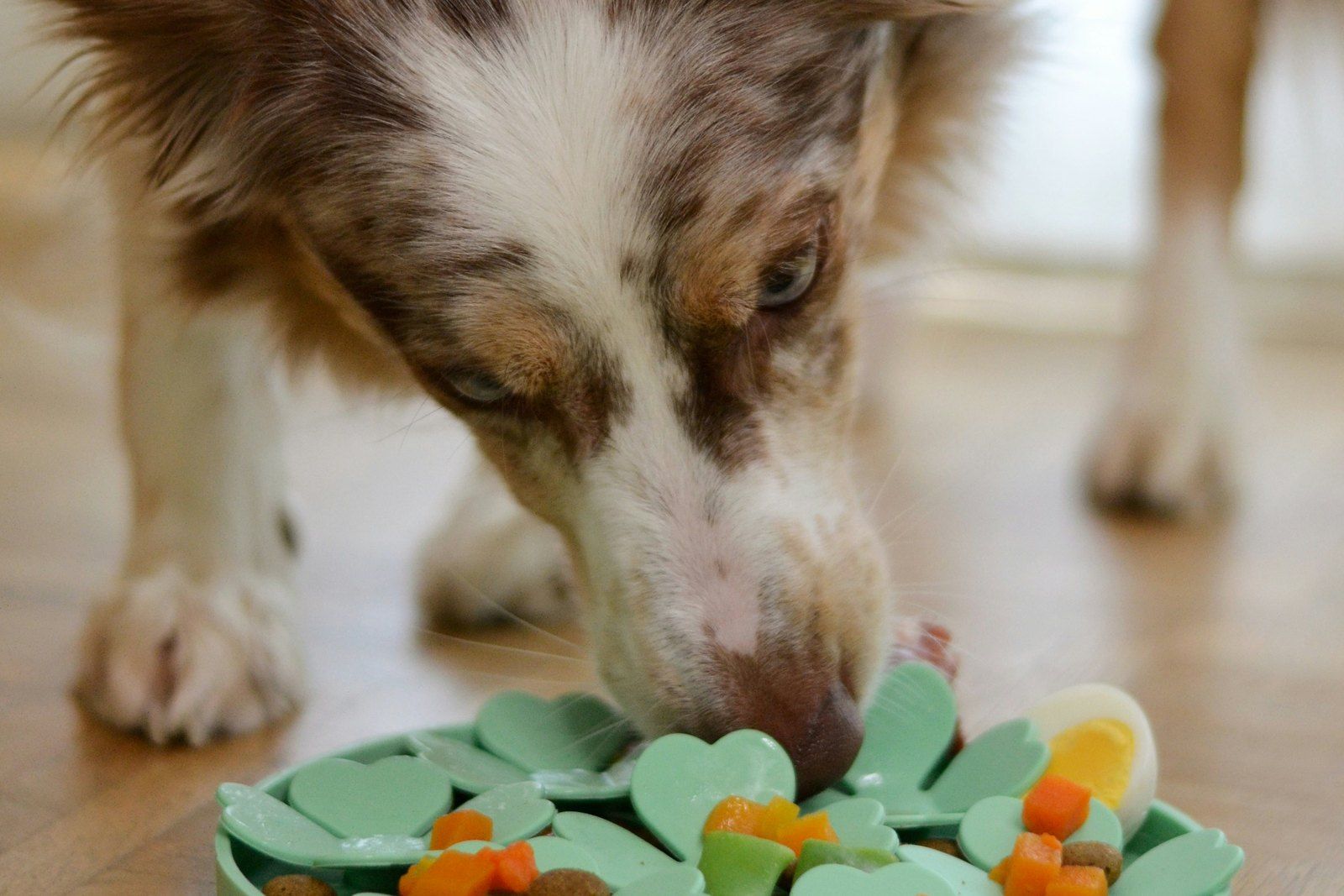 Mental Stimulation for Dogs: Easy Games and Enrichment
Why dogs need brain work as well as walks, plus easy sniffing games, food puzzles and training games for small homes, busy owners and active breeds.
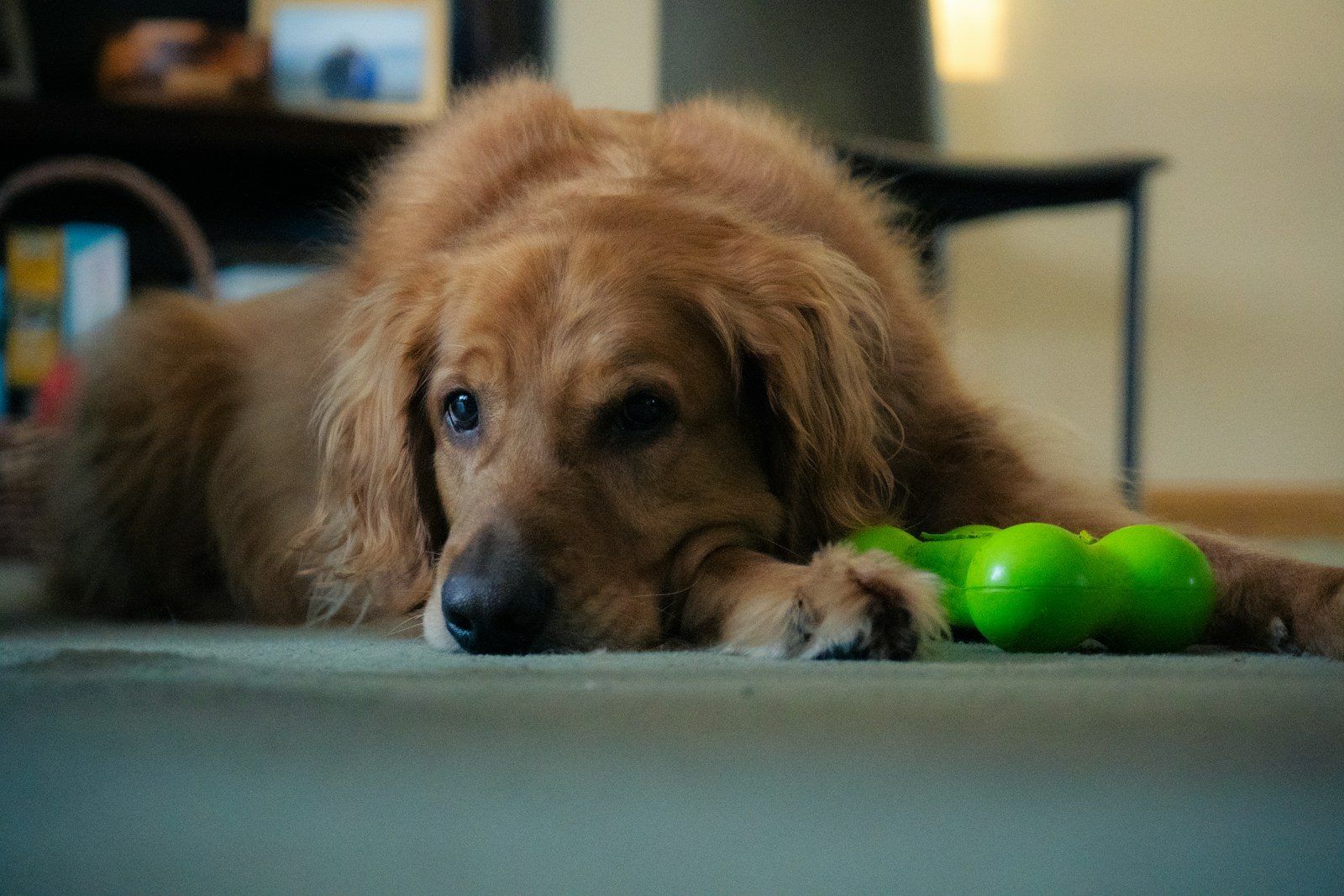 How to Tire Out a Dog Indoors: Ideas by Situation
Rain, a small apartment or a busy day? How to tire out a dog indoors with nose games, short training and safe play, picked for your situation and your dog.