How to Teach a Dog to Stay: Time, Distance, Distractions
Affiliate disclosure: we may earn a commission from the program mentioned below. How this works.
Short answer
Teach a release word first, so your dog knows when the stay ends. Then ask for a sit or down, say "stay", wait a second or two, reward and release. Build time a few seconds at a time, then add distance and distractions one at a time, making the other two easier while you do. Always go back to your dog to reward, and never punish a broken stay.
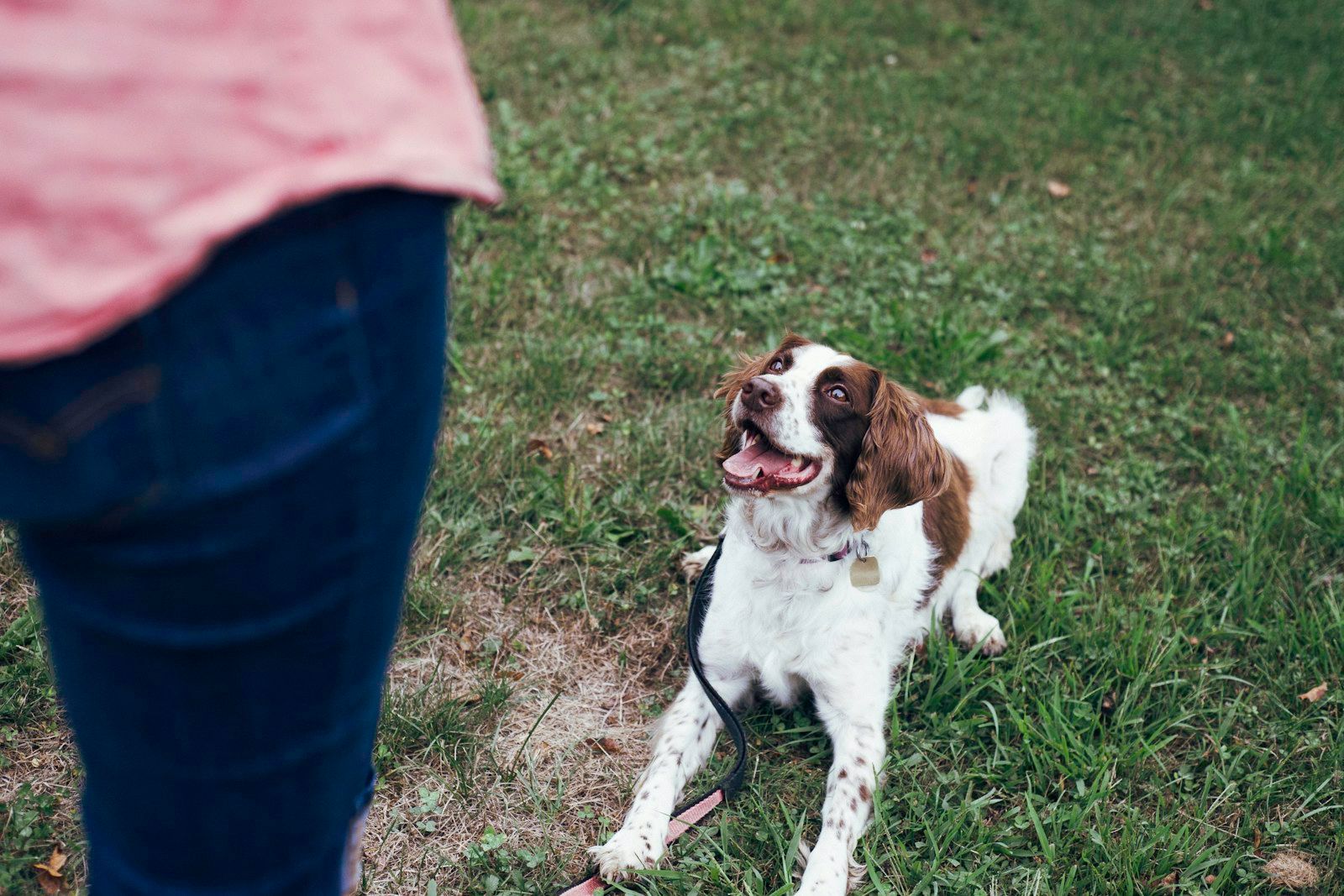
A reliable stay makes everyday life easier, from answering the door to carrying in the groceries. The AKC defines it clearly: unlike “wait”, which means hold on for a moment, “stay” means stay in a specific position until you release your dog. This guide breaks the stay into its three parts, time, distance and distractions, and covers the problems that trip most people up. For the other everyday cues, see our guide to basic dog commands.
Why do dogs find stay hard?
Stay asks a dog to do nothing, which is the opposite of what most dogs want. The AKC says it plainly: stay is boring for dogs, so the stay itself, not the release, has to be what earns rewards. Two more things make it tricky:
- Your movement pulls your dog. The AKC notes that dogs are used to being in front of you during training, so when you move backward, they want to follow.
- Three skills hide in one word. Whole Dog Journal’s Pat Miller describes a good stay as your dog staying in place for some time, while you’re at a distance, with distractions around. Trying to teach all three at once is what makes stays fall apart.
| The “D” | What it means | Start with | Getting harder |
|---|---|---|---|
| Duration | How long your dog holds the position | 1 to 2 seconds, with you right beside them | 30 seconds or more |
| Distance | How far you move away | One step back, then straight back to your dog | The edge of the room, then leaving the room |
| Distraction | What’s happening around your dog | One small jump or a clap | A ball thrown, people moving, outdoors |
How to teach stay, step by step
Before you start, your dog should know the marker word (“yes” or a click). Our basic cues guide explains how to teach the marker word.
Step 1: Teach the release word first
The AKC’s first step is to teach your dog what the release word means, before you ever say “stay”:
- Ask your dog to sit or lie down.
- After one second, calmly give a treat and immediately say your release word.
- Encourage your dog to get up: walk away, pat your legs or clap.
- Praise your dog when they move.
- Repeat until your dog understands that the word means they can move.
Choosing the word. Use one word, consistently and only for releasing (AKC). Both the AKC and Whole Dog Journal warn about “okay”: it’s so common in conversation that you can release your dog by accident. Pat Miller suggests “free”, “all done”, “at ease” or “release”.
Step 2: Add the stay cue and build time
The AKC says to start with duration, stay right next to your dog, and remove distractions:
- Ask for a sit or down.
- As soon as your dog is in position, hold your hand out flat like a stop sign and say “stay”.
- Wait a second or two, then calmly give a treat.
- Release your dog and praise them when they move.
- Next time, wait a few more seconds before the treat and release. Build a few seconds at a time.
Pat Miller adds two tips: extend the time by a second or two only after about half a dozen successful repetitions, and mix longer stays with shorter ones so it doesn’t keep getting harder. Once you reach about 10 seconds, the AKC suggests giving several treats during the stay, calmly, repeating “stay” and the hand signal so your dog knows they aren’t finished.
If your dog gets up, Pat Miller suggests a cheerful “Oops!”, taking the treat away behind your back, and asking for the sit again. No scolding.
Step 3: Add distractions, then distance (one at a time)
The AKC suggests adding the other two Ds only once your dog can stay for at least 30 seconds, and lowering your expectations for the others each time you add one. Even if your dog can stay for two minutes in a quiet room, ask for only a few seconds when you add a distraction.
Distractions. Start small and build:
- one small jump or a clap while you stand in front of your dog (Whole Dog Journal);
- then more movement: two jumps, hopping on one foot, getting down on the floor (Whole Dog Journal);
- then bigger distractions, like a ball thrown nearby (AKC).
Distance. The AKC’s steps:
- Ask your dog to stay, take a single step back, and immediately return to give a treat.
- Release your dog.
- Repeat with two steps, and slowly build to the edge of the room.
Pat Miller suggests varying the direction too: step to the side as well as backward.
Which comes first? The sources differ slightly. The AKC adds distractions before distance, because moving away is already a kind of distraction. Whole Dog Journal adds distance first, then distractions. Both agree on the important part: change only one thing at a time, and make the others easier while you do.
Step 4: Always go back to reward, then release
Return to your dog before you release them. The AKC explains that if you release from far away, you can’t reward your dog while they’re staying, and they may learn that a certain distance means the stay is over. Pat Miller adds a detail: after you return, pause for different lengths of time before releasing. If you always release the moment you get back, your dog will treat your return as the release.
Step 5: Combine the three Ds
When your dog can handle each “D” on its own, the AKC suggests combining them and raising the challenge, for example by leaving the room or practicing outside. Pat Miller’s advice is to mix the three at random, and to make them easier again whenever your dog can’t hold the position.
Track your stays
Write down what your dog can do in each “D” so you know where to start next time:
| Date | Duration | Distance | Distraction | Place | Notes |
|---|---|---|---|---|---|
| Example: Mon | 15 seconds | Beside dog | None | Living room | Ready for 20 seconds tomorrow |
Common problems and fixes
| Problem | Likely reason | Fix |
|---|---|---|
| Your dog gets up before the release | The step was too big, or your movement lured them (AKC) | Go back to an easier step; don’t punish |
| Your dog follows you when you step back | Moving backward invites them to come (AKC) | Build time first, then one step and straight back |
| Your dog gets up the moment you return | You always release as soon as you’re back (Whole Dog Journal) | Pause for different lengths of time before releasing |
| Your dog won’t get up when released | The release word isn’t clear yet | Practice Step 1 again; Whole Dog Journal says to get excited, encourage your dog up and praise them |
| Your dog “releases” when you say “okay” in conversation | “Okay” is too common (AKC, Whole Dog Journal) | Pick a different, less common release word |
| Stays fall apart in new places | Too many changes at once | Shorten time and distance, then build up again there |
Common mistakes
- Rewarding the release instead of the stay. The AKC warns that this makes leaving more rewarding than staying.
- Skipping the release word. Without it, your dog decides when the stay ends (AKC, Whole Dog Journal).
- Raising two “D”s at once. Change one at a time (AKC, Whole Dog Journal).
- Releasing from a distance. Walk back first (AKC).
- Punishing a broken stay. The AKC says not to punish: you probably asked for too much too soon.
Stay for puppies, adults and older dogs
Puppies. The AKC suggests keeping puppy training sessions brief, just five to 10 minutes, and always ending on a positive note; if your puppy struggles, finish with something they already know. Keep the stay steps tiny. Our puppy training guide covers how training fits into the first months.
Adolescents. A stay your dog knew at 5 months may wobble later. Our adolescence guide explains why, and the fix is the same: make it easier, then build again.
Senior dogs or dogs with sore joints. Let your dog stay in whichever position is more comfortable, on a soft surface, and keep stays short. AAHA lists trouble lying down among the possible signs of pain, so if sitting or lying down seems difficult, ask your veterinarian.
When to get help
A trainer who uses reward-based methods can help if your dog can’t settle into any stay at all, gets very frustrated or anxious when asked to wait, or if you need a reliable stay for safety around doors and cars. If your dog seems unable to relax even at home, our guide to teaching a dog to settle may help first.
Not sure where to start? Take the 7-question quiz and get the guide for your result by email.
Frequently asked questions
What's the difference between stay and wait?
The AKC explains that "wait" means hold on for a moment, while "stay" means stay in a specific position until you release your dog. A dog on a stay should still be in the same spot when you come back, even after a long time.
What release word should I use?
Any word you use only for releasing. The AKC lists "okay", "free" and "release", but warns that "okay" comes up so often in conversation that you may release your dog by accident. Whole Dog Journal's trainer Pat Miller doesn't recommend "okay" for the same reason and suggests "free", "all done", "at ease" or "release".
Why does my dog keep getting up before I release them?
Usually the step was too big. The AKC says that if your dog breaks the stay, you probably lured them up or asked for too much too soon: don't punish, repeat the cues and go back a step. Moving backward away from your dog can also pull them toward you.
How long should a dog be able to stay?
Build up slowly. The AKC suggests reaching at least 30 seconds of duration before adding distractions or distance, and lowering the time again whenever you add something new. Whole Dog Journal suggests mixing longer stays with shorter ones so it doesn't keep getting harder.
Sources
- How to teach your dog to stay — American Kennel Club
- How to teach a dog to stay — Whole Dog Journal (Pat Miller, CBCC-KA, CPDT-KA)
- 15 signs of pain in dogs — American Animal Hospital Association (from Michael Petty, DVM)
- Teach your puppy these 5 basic commands — American Kennel Club
Related guides
 Basic Dog Commands: How to Teach the 7 Essentials
How to teach sit, down, stay, come, leave it, drop it and go to mat with force-free rewards, plus how to make cues reliable around everyday distractions.
 How to Stop Counter Surfing: A Force-Free Plan
Why dogs steal food from kitchen counters, the foods that make it risky, and a force-free plan with management, go to your place and leave it to stop it.
 How to Stop a Dog From Jumping on People
Why dogs jump up to greet people, why pushing and scolding backfire, and a force-free plan to teach four paws on the floor and a sit for every greeting.